Author’s Introduction
What if art works and arts-related programming could be recognized like other vital forms of labor – that being, “worthy” of dedicated City patronage? Ultimately, the hundreds of murals, the fabric of jazz history, the color movements across designed spaces in Philadelphia inform our society’s fiscal reality more than we ever truly give them credit for.
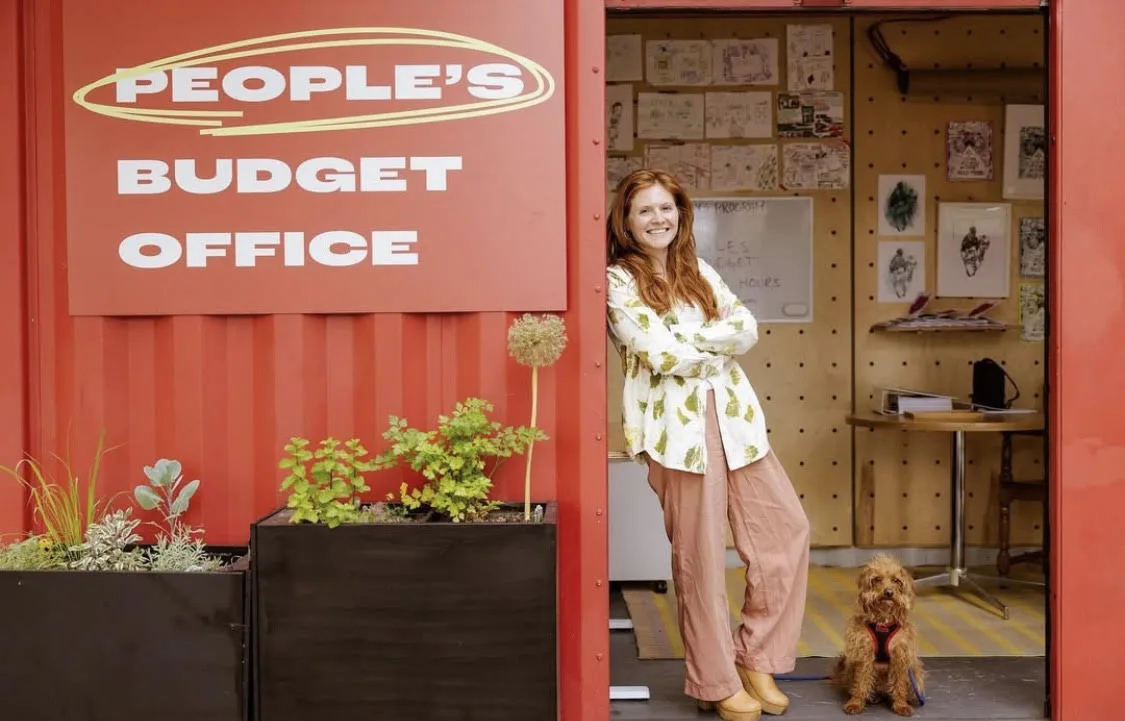
We’ve learned that at least when the Mayor’s office raises the stakes and proposes “zero budget” for the City’s arts office – as Mayor Kenney’s administration did in 2020 – Philly’s public is moved to speak up in support for the sector’s services. In 2021, a response to the issues associated with said budget cycle was the impetus for the People’s Budget Office (PBO), a project of Mural Arts, a program which is partially funded by the City. Helmed by artist Phoebe Bachman, PBO has increased its programming in the present day. I was interested to hear Phoebe’s point of view on the role of art in our society, and art’s activation as part of PBO’s history. Here is an edited transcription of our conversation.
Brigid O’Brien: The inception of PBO takes us back to 2020, when talks of the budget plans at that point in time proposed a massive cut in the budget for the arts.
Phoebe Bachman: In 2020, the City was facing financial difficulties due to the Covid-19 pandemic and its effect on the local economy. When people are unemployed, it means that the City loses revenue because we rely heavily on the Wage Tax. Mayor Kenney’s Administration was looking for which programs could be cut…things like arts, and public spaces like libraries, recreation centers. Programs that to many of us are very important for investing in our community and for thinking about what safety means. At the same time, calls to “Defund the Police” echoed in Philadelphia, bringing to light the inequity in our city’s budget, [ed. note: 15% of the Philadelphia budget is devoted to policing. Source].
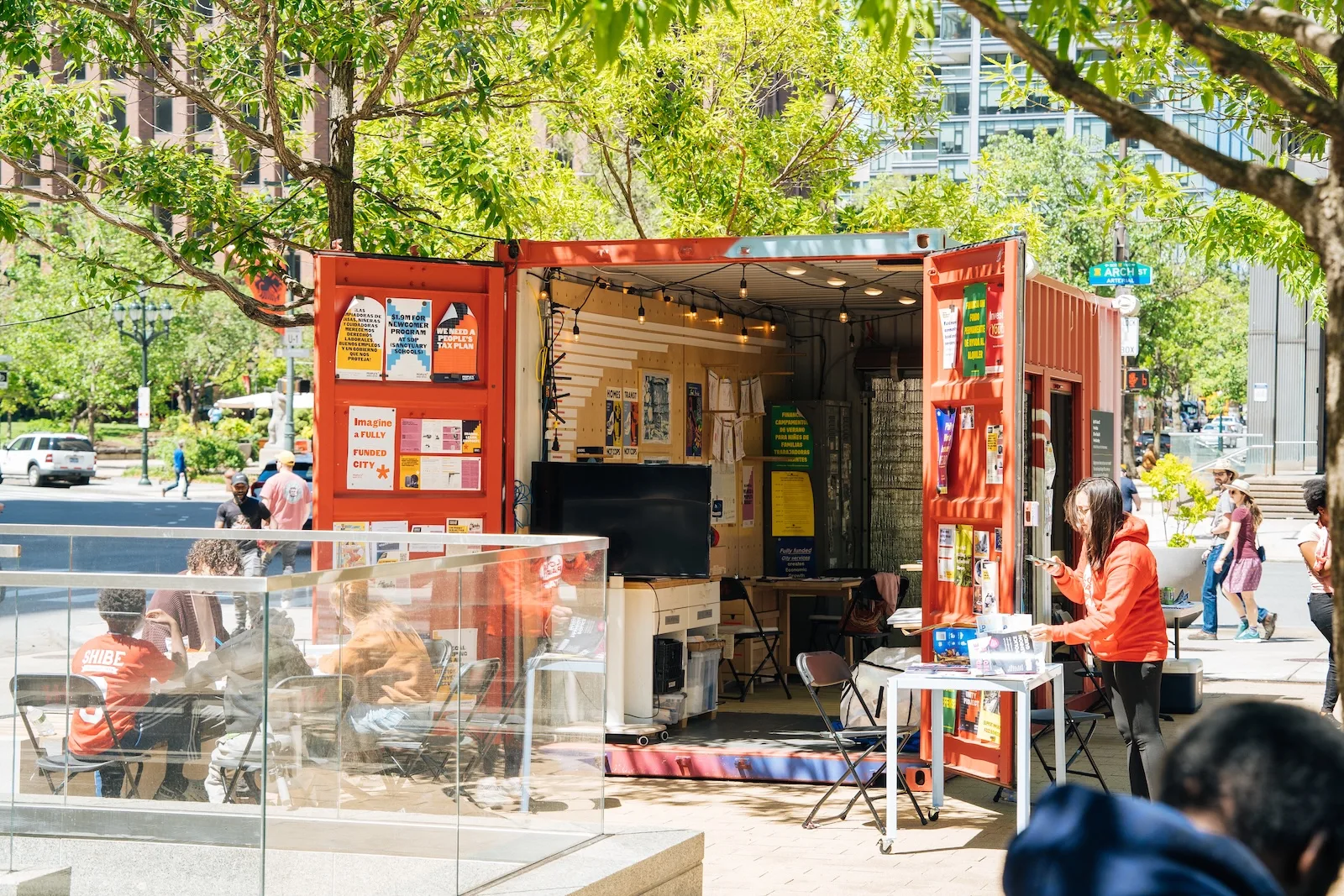
Long story short, we created some educational programming to illuminate this process. We hosted a series of teach-ins online that were focused on different issues of the budget. The following year, I put out a call for artists in residence, who ultimately wanted to work collaboratively to investigate different aspects of the city budget for that cycle. The next year we took over a shipping container in Love Park (an in-kind lend from Parks and Recreation), where we streamed budget hearings and continued with programming from artists in residence. People are welcome to stop in as passersby during office hours to check out our services or engage in any of our scheduled programs. Last year we started doing budget 101 in different neighborhoods across the city, created a performance in City Hall, and continued our work at Love Park.
People’s Budget Office is a project of Mural Arts Philadelphia. The project is funded by the William Penn Foundation and the City of Philadelphia, including staff pay. Mural Arts itself receives city funding in a process similar to other departments: Mural Arts works with the City’s Budget Office to create a budget in the fall, the City’s Budget Office and the Mayor create a proposed Budget, Mural Arts testifies in front of City Council, and then they receive their budget allocation.
Brigid: Can you tell the readers about the budget cycle timeline?
Phoebe: The fiscal year starts on July 1, and runs through June 30th. So, between September and November is when departments are giving their priorities to what they want to see in their budget. Around December, the city budget office takes all the requests and works with the Mayor’s office to refine what is going to actually be in the included budget. The Mayor will deliver that in the form a budget address in March. After, City Council hosts hearings with different departments about their proposed budget. Then they essentially negotiate with the Mayor’s office, and then they’ll come up with a final budget plan to be presented back to the committee of the whole and it needs to be adopted before the end of June.
Until now, PBO has been focusing its programming around spring budget activity while City Council is debating the budget. Because of the current grant from William Penn Foundation that is covering staff pay, PBO will be able to do year-round work next year. Ideally, this work could be funded year-round since Budget work does not happen in just the spring.
Brigid: You’ve created a program that allows the public to advocate for and understand the services and the work that they value. What do you think it is about the arts that seem so foundational to the public’s needs?
Phoebe: I think that the arts are a basis for imagination. As corny as it sounds, art is key for us in changing our circumstances and creating better lives for ourselves and our neighbors. It’s hard to have a City that we want to see, without imagining what it looks like. Artists are just very well suited to be carrying out and working together on that. And it’s also why I always work collaboratively.
Brigid: Do you see this PBO as a replicable model? Or, do you find Philly to be a unique case?
Phoebe: I want people to use this. I’d love for us to be able to take it to other places and think, with other city governments about how they approach their budgeting processes in more creative, unique ways. There lots of interesting kinds of budget-based work that’s happening in a lot of different places. But I think some of these issues are unique to our city.
Readers – in what ways could your own work engage a reframe of our society? Or, can we challenge ourselves to think of ways that dedicated funding could make this possible city-wide? Let PBO’s work be a case for innovation – and practical application of creative work in our municipal systems.
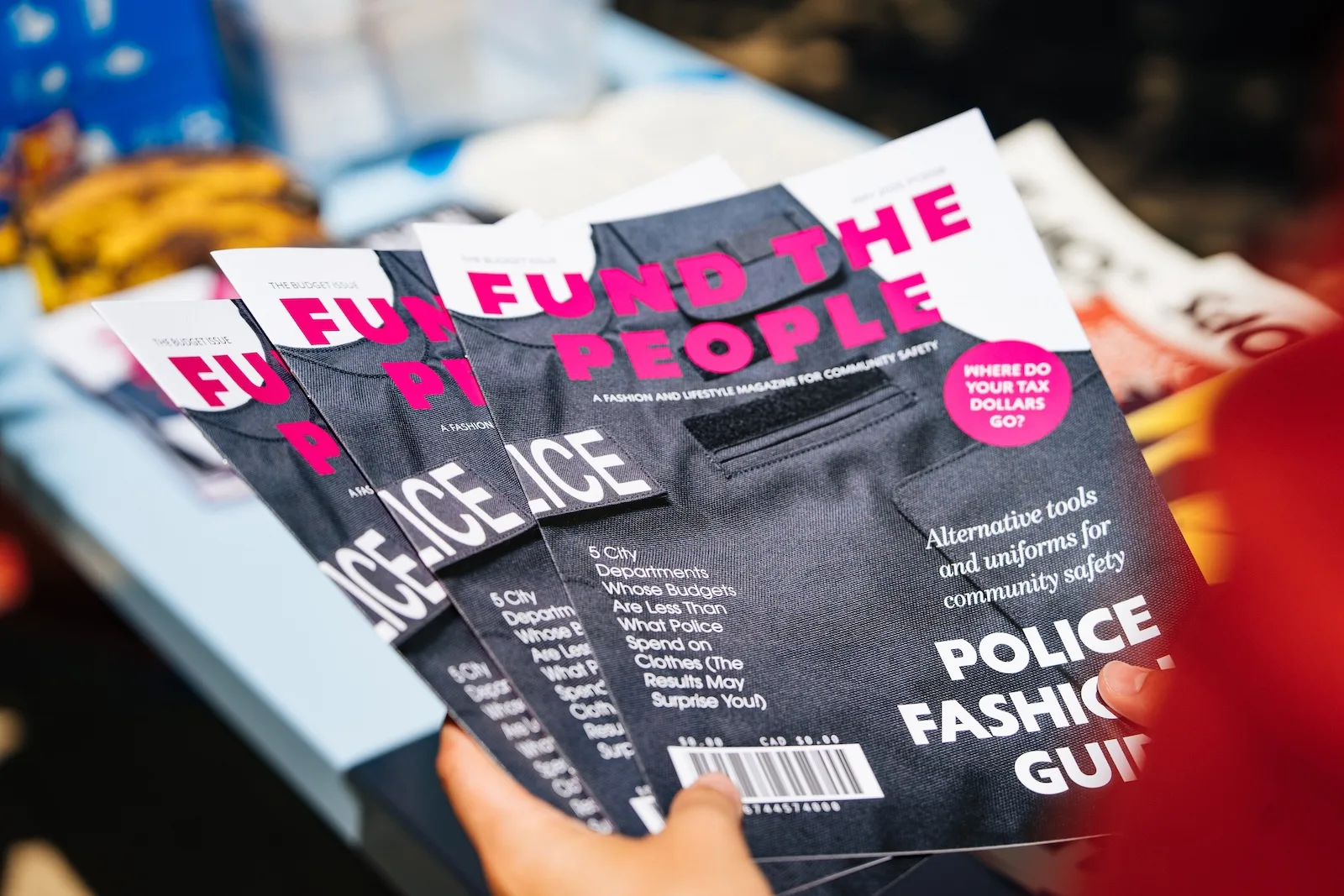
*Learn more: Aaron Brokenbough is PBO’s last artist in residence this cycle and will be leading a program this upcoming Saturday (May 24). Another example of artist-facilitated programming around budget and civic systems is a recent workshop performed by Lily Xie, in which participants reimagined police budgeting, including elements of police uniforms.
Finally, in these last few days before Council goes behind closed doors to negotiate the city budget, the People’s Budget Office held an online public budget survey to get data on what people’s funding priorities are and to gauge how much they know about the process. The results will be shared with Council.