

reviews, features & interviews

Treasures of Ancient Iraq: Rediscovering Ur’s Royal Cemetery at the Penn Museum

By

October 19, 2009   ·   7 Comments

Iraq has been front-page news for years and the Holy Crescent is central to Jewish and Christian scripture, so it’s surprising that some of the greatest treasures excavated there have been sitting in Philadelphia since the early 20th Century and been relatively ignored.  The British Museum’s spectacular goat of lapis lazuli caught in a thicket of gold has a twin at the Penn Museum.
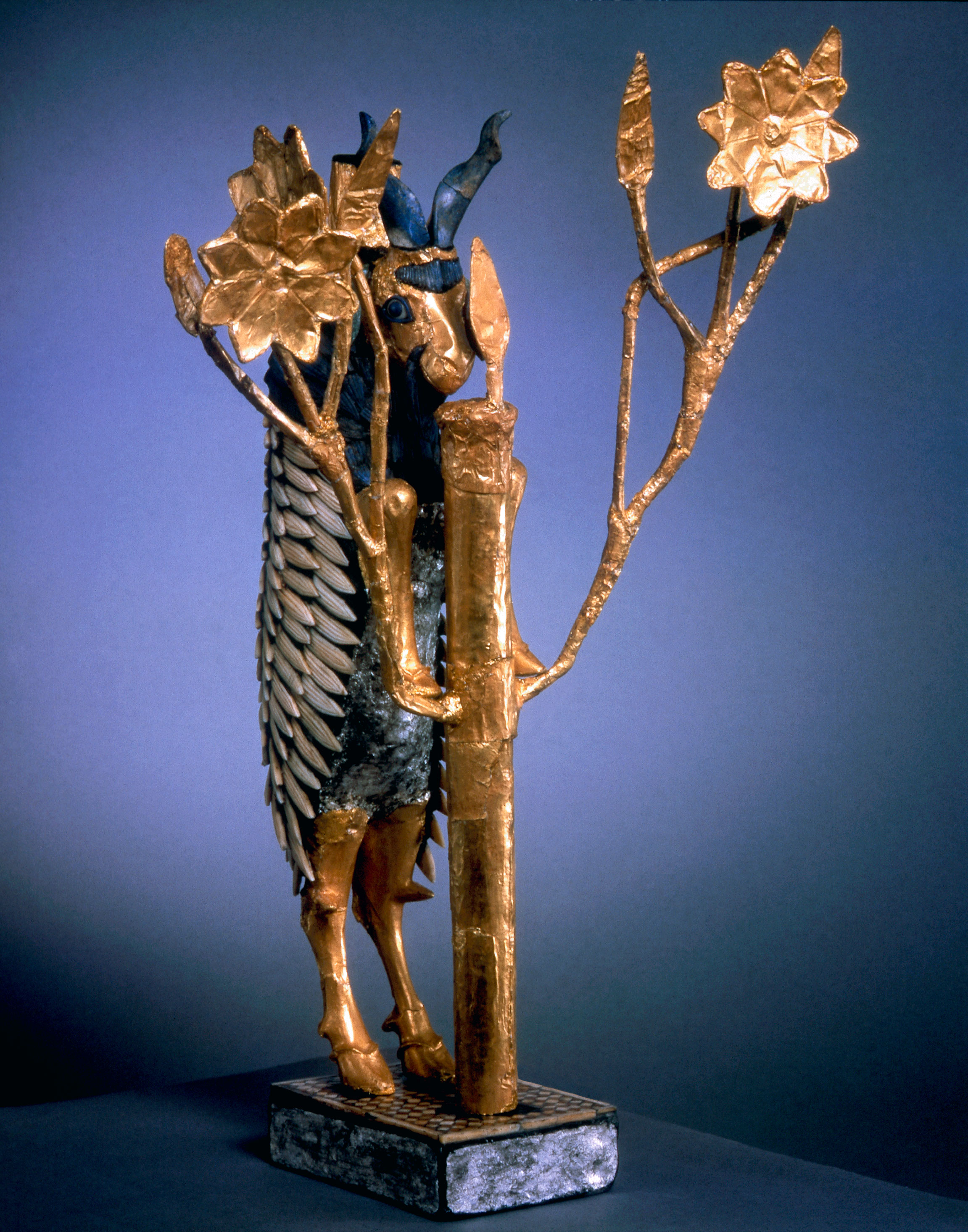
“Ram Caught in a Thicket” 2550 BCE gold, lapis lazuli, copper, shell, red limestone

“Ram Caught in a Thicket” 2550 BCE gold, lapis lazuli, copper, shell, red limestone Penn Museum

Iraq’s Ancient Past; Rediscovering Ur’s Royal Cemetery, a re-installation of the museum’s own collection, opens to the public on Oct.  25, 2009 at the Penn Museum; that Sunday will be a celebration with programs for adults and children. All exhibitions tell stories, and when much of this material was on an extended tour from 1998-2006, the story was of craftsmanship, luxury materials, in a word, art. The current story concerns their excavation and second life out of the ground, and explains why half of the treasure stayed in Iraq while the other half was split between the British Museum and Penn, who payed for excavation.
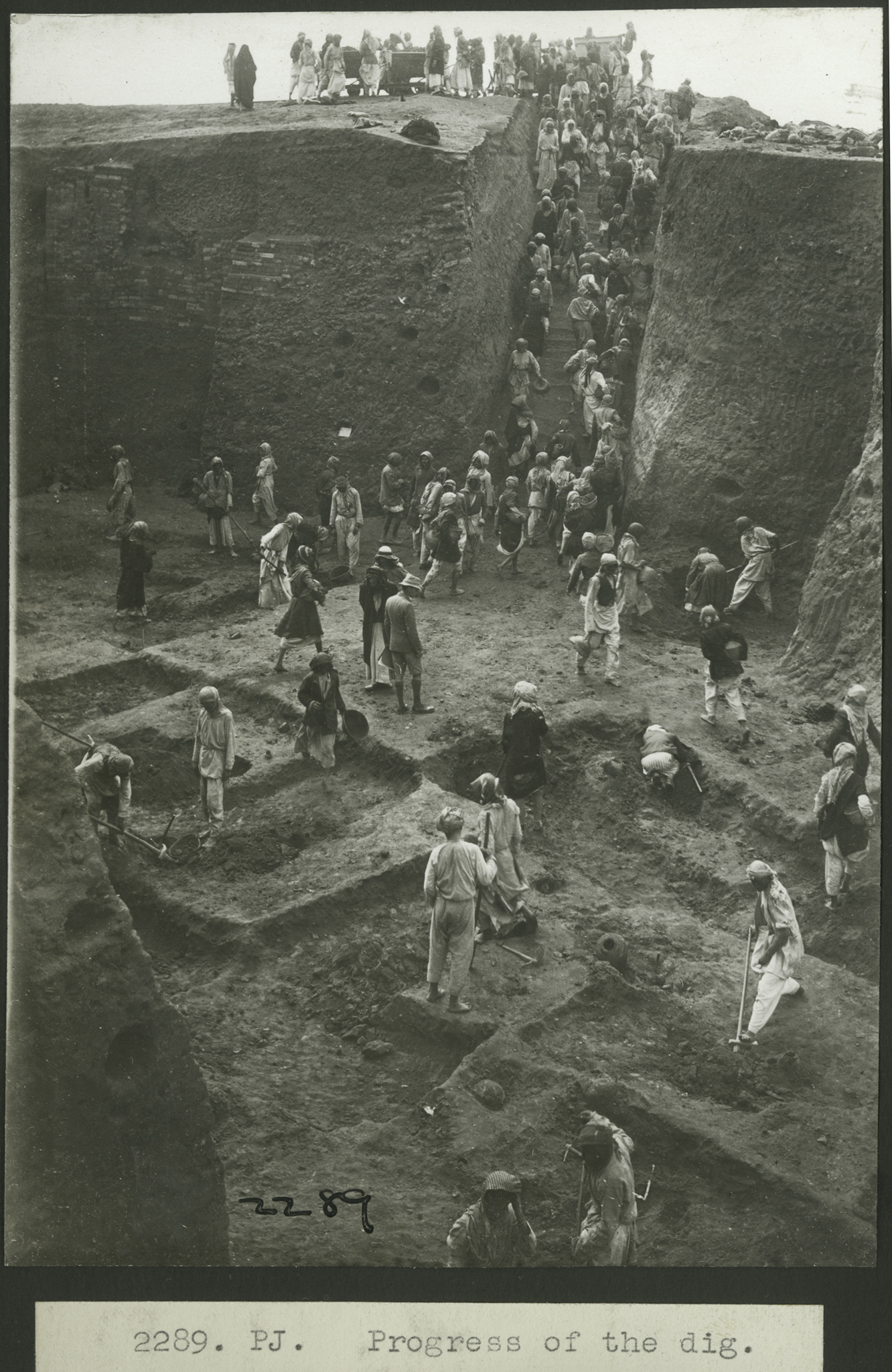
The excavation siteat Ur  in 1933-34

The excavation siteat Ur in 1933-34

The unearthed goods from the royal tomb have been valuable to several generations of archaeologists.  Identification of materials such as gold, lapis lazuli and carnelian confirms trade routes in the third millennium BCE, for none of the valued materials  exist in Iraq; the only local materials were textiles and ceramics.
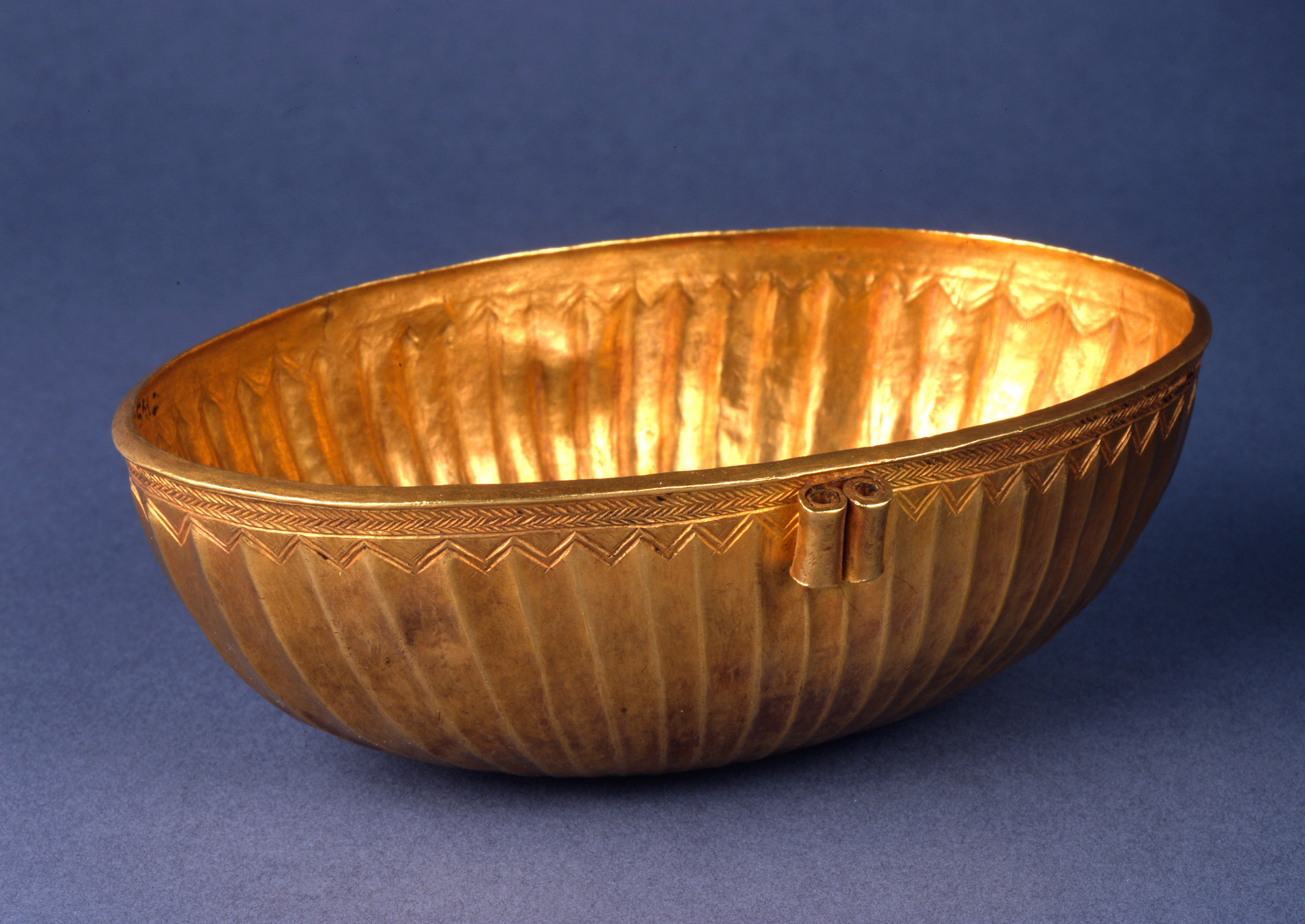
 Gold bowl    ca. 2550 BCE

Gold bowl ca. 2550 BCE

Two skulls from the excavation were recently studied with CT scans at the nearby Hospital of the University of Pennsylvania; this revealed that the royal retainers hadn’t gone willingly to their death, as had been thought, but had been hit in the head, probably intentionally.  Unfortunately C. Leonard Wooley, who directed the excavation, threw out other bones; scientists now use them to reveal a variety of information.
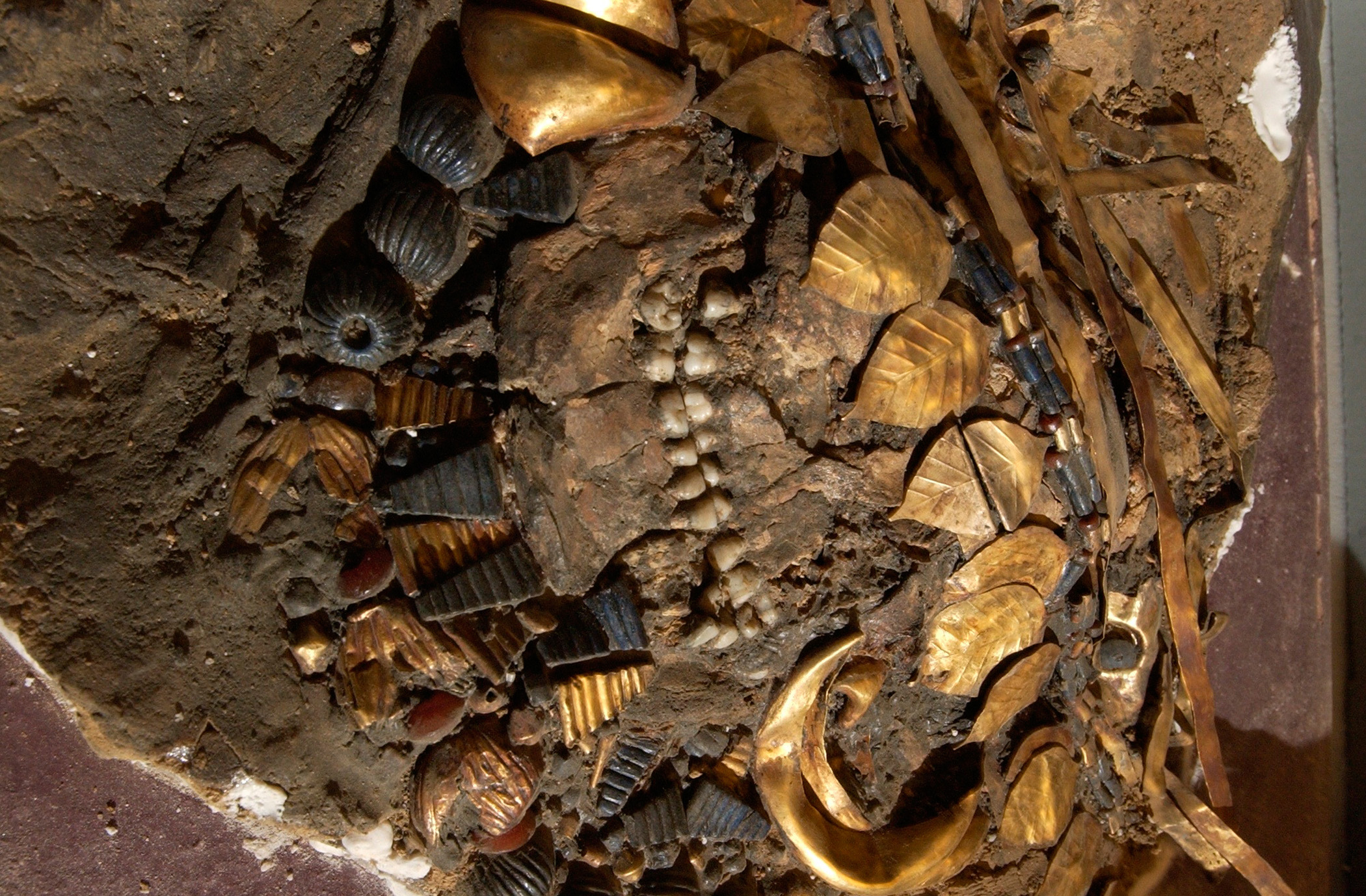
 Close-up of the skull of a female courtier with remains of her headdress

Close-up of the skull of a female courtier with remains of her headdress

Donny George, former director of the Iraq Museum, attended the press preview and I asked him whether there had ever been controversy about exhibiting the human remains; he said never. They had been shown in Bagdad without problem.

Some questions can’t be aided by modern science.  Queen Puabi’s gold headdress, like all the jewelry, was found as a heap of individual pieces and had to be reconstructed.  It’s like a puzzle, but there’s no way to know if you get the right answer.  Archaeologists believe the original reconstruction was wrong, and it’s not in the exhibition yet because the current reconstruction is still going on.
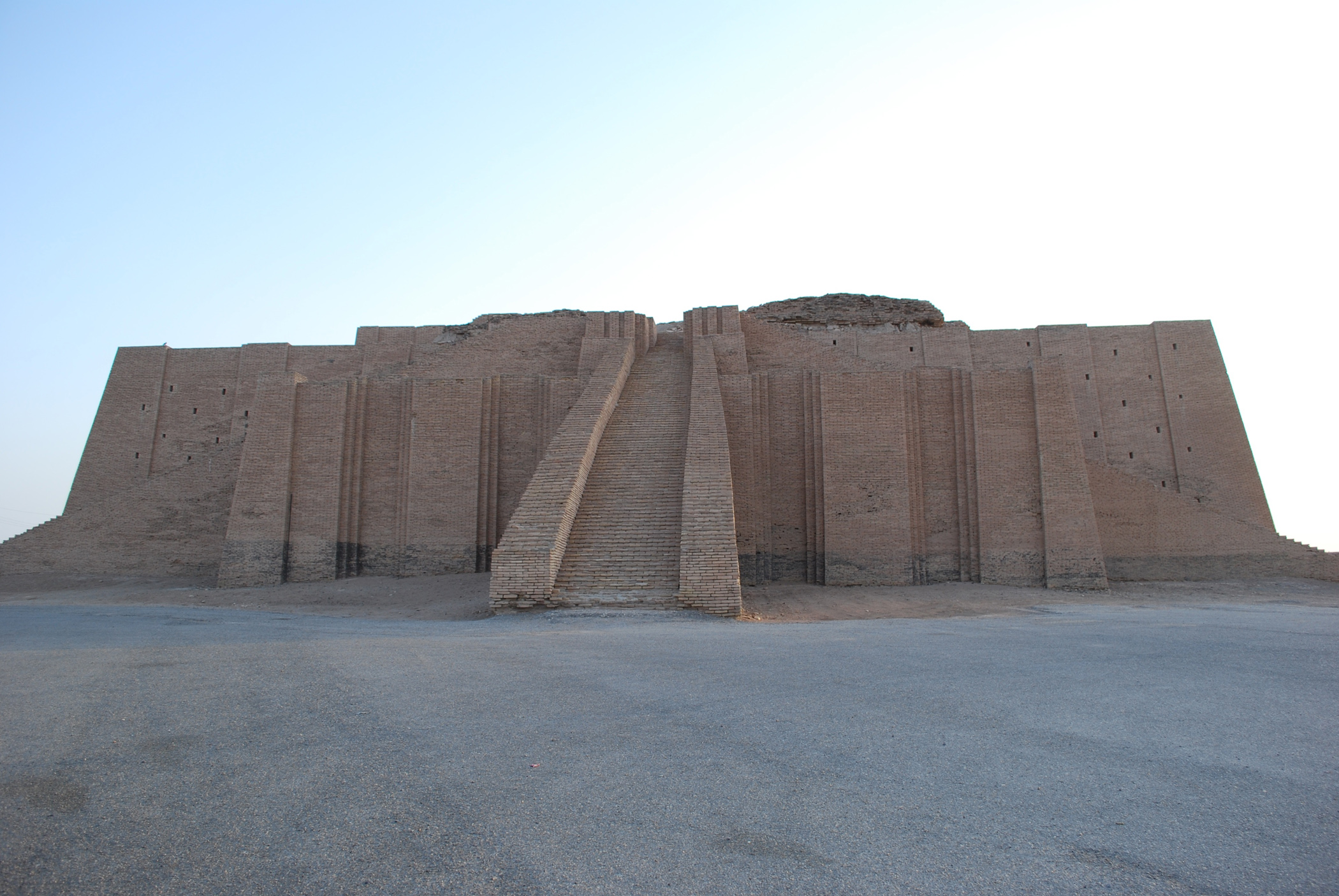
 2009 view of the Ziggurat at Ur, constructed ca.  2100 BCE and restored ca. 600 BCE

2009 view of the Ziggurat at Ur, constructed ca. 2100 BCE and restored ca. 600 BCE

The exhibition includes period photographs of the excavation and contemporary newspapers which confirm that the discoveries were on a par with Tutankhamun’s tomb, discovered in 1922.  Labels bring the dig to life.   Midway through the work Wooley wrote: I’m sick to death of getting out gold headdresses.  It also situates the excavation within the history of Iraq which only became independent in 1932.  Wooley’s permit to excavate was numbered 1.  Current law forbids archaeologists from taking home unearthed goods; all goes to the state (except for unofficial digs, or looting, which is a problem in many countries with valuable archaeological material). Donny George reassured me that Iraq has been happy to work with scholars, providing samples for examination and shards for study.

Tags: , , , , ,


Readers Comments (7)

  1. Salah says:

    The unearthed goods from the royal tomb have been valuable to several generations of archaeologists.</i.

    As an Iraqi I never ever forgot the stupid comment made by the former defence secretary Rumsfeld, when asked about looting in Iraq he replay let them feel the freedom!!

    And the other sad thing when US and P. Bremer occupied Babylon site and made it a military camp that caused a lot of damage to thie very and vital historical site ever in the word be damaged by US forces and their official, this what tells is how ignorance these people of the very rich history of first civilisation that give first ever the Code of Law.

     
  2. Caroline Mannheimer says:

    Philadelphia, and Philly’s higher institutions of learning, in particular, is a treasure trove of archealogical finds! They need someone like ME to uncover, display and market it all!!

     
  3. Andrea Kirsh says:

    Salah,
    I will not defend Rumsfeld on this or any other subject.
    Those of us who value art and heritage are as appalled as you are at the reckless attitude the US army took towards Iraq’s museums and historical sites. In WWII the army had staff to point out the cultural sites for special protection. This obviously points to a need for US museums to do outreach to the government and the military as well as to their usual communities.

     
  4. Gabrielle says:

    To Salah,
    I agree with you.
    I am an English woman. I saw images of the looting on television when my country and the United States so wrongfully invaded Iraq. As an artist and as a human being, I was appalled. I was in tears of rage and disbelief. I was shouting at the television in the middle of the night for the idiocy of it all. Rumsfeld did not even know the value of these artefacts, both to your country, and also to the whole world. It is an outrage. Why have we allowed these ignorant criminals to be in charge of our world? Babylon had the first libraries, I think, as well as the first code of law. Gabrielle.

     
  5. Alex says:

    To Salah,
    I am a student studying Archaeology in my home town in England, and I am currently studying Ancient Mesopotamia, which focuses on the Cemetery at Ur.
    While the finds are of incredible historical significance (as well as being indescribably beautiful), and should be shown to the world, I agree with you and feel that they belong back to their own country, where they will be treated with more reverence, and will mean so much more to the people who they rightly belong to.

     
  6. Mohammed says:

    To Salah When i see our history distroyed, i cry and stillcry because the world lost a greatest codes about the past and science