
This week’s Weekly has my review of New American Voices at the Fabric Workshop and Museum. Below is the copy with some pictures.
The Fabric Workshop and Museum often collaborates with big-name artists like Cai Quo-Qiang, the fireworks and gunpowder ace whose show opens next month, but what the FWM does even better—as you can see in their current show, “New American Voices”—is work with lesser-known artists. Often, these collaborations produce the freshest and most unexpected results and help raise the profile of deserving, under-the-radar artists.
With works ranging from videos and installations to a felted cave (take your shoes off to enter) and a group of mechanized whirligigs, the sampling from five mid-career artists from around the country doesn’t represent any new art movement. In fact, some of the work is pretty traditional. But the voices raised are people- and earth-centered, and the works are life-affirming without posturing, and that makes them—and the show—endearing.
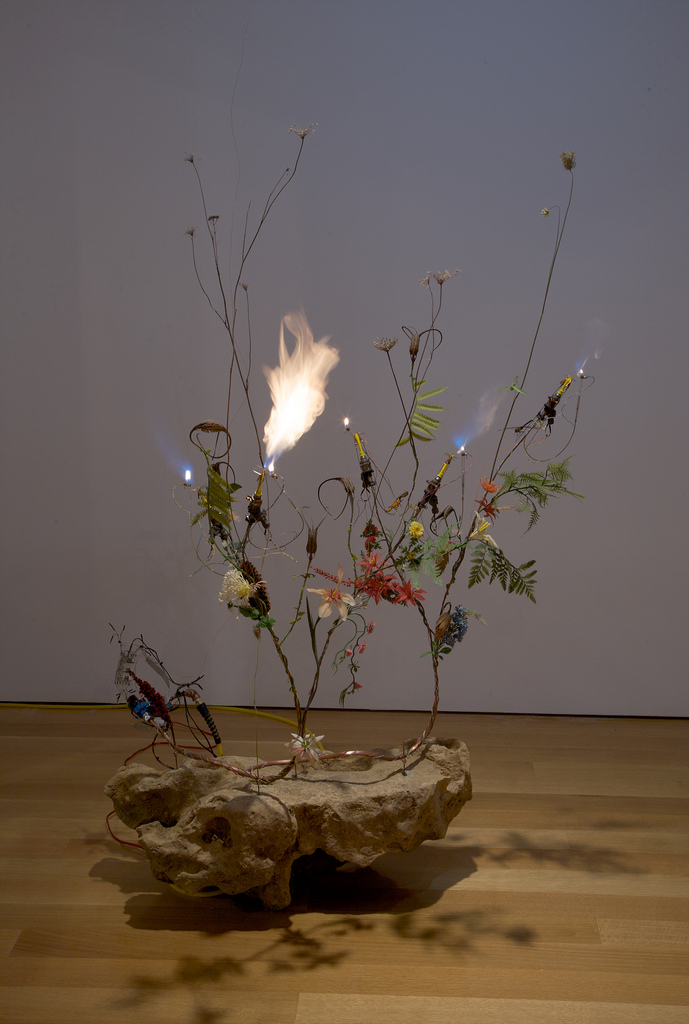
Among the strongest works in the show are Bill Smith’s mechanized electronic pieces—made of lacy high-tech filaments shaped into galaxy-like starbursts and decorated with low-tech beads, flowers and small animal bones. Five light-weight works hang from the ceiling and undulate to the movement of air in the room. Two works— Decline of the eastern songbird (2008) and Integrated coaxial magnetic orbs with flagellating arms (2007)—perform a song and dance when triggered by hand or by blowing on them.
Decline makes birdsong come alive via valves, balloons and hot propane gas in a delicate and prickly contraption that sounds like a falsetto-calliope. Smith has a technical degree in diesel mechanics and an undergraduate degree in biology. But the works transcend the Franklin Institute with their metaphorical underpinnings about the fragility of nature and wonder of our ecosystem.
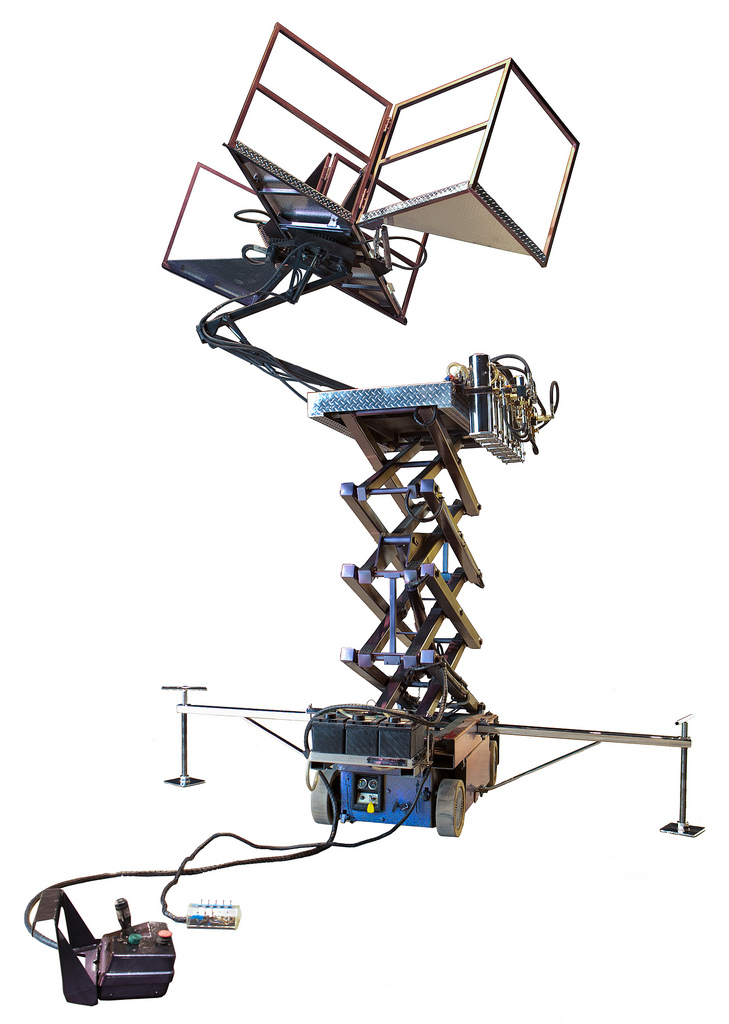
Three artists make work focused on ethnic identity, and of those, Ruben Ortiz-Torres’s video performance of Hi ’n’ Lo (2008) is the most unexpected and pleasing. Ortiz-Torres tricked out a standard-issue industrial scissors lift with bling at the bottom and new platform capabilities at the top and then choreographed the machine to do hip-hop dance moves. Drawing inspiration from the Mexican-American car culture in Los Angeles as well as the caliber of infrastructure jobs that employ Latino workers, the piece is wry and knowing.
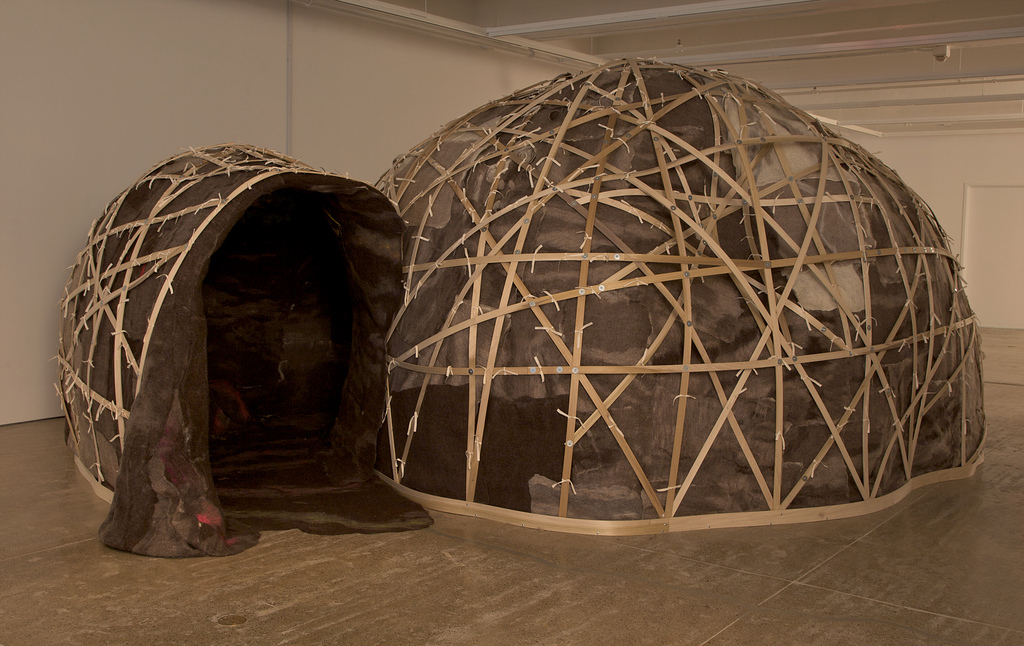
Marie Watt’s wool felt cave Engine (2009) honors the artist’s Seneca forefathers. The cave is constructed of felted parts made at FWM and includes a projection on the inside of a Native American telling a traditional story. It’s an expected ode to indigenous peoples.
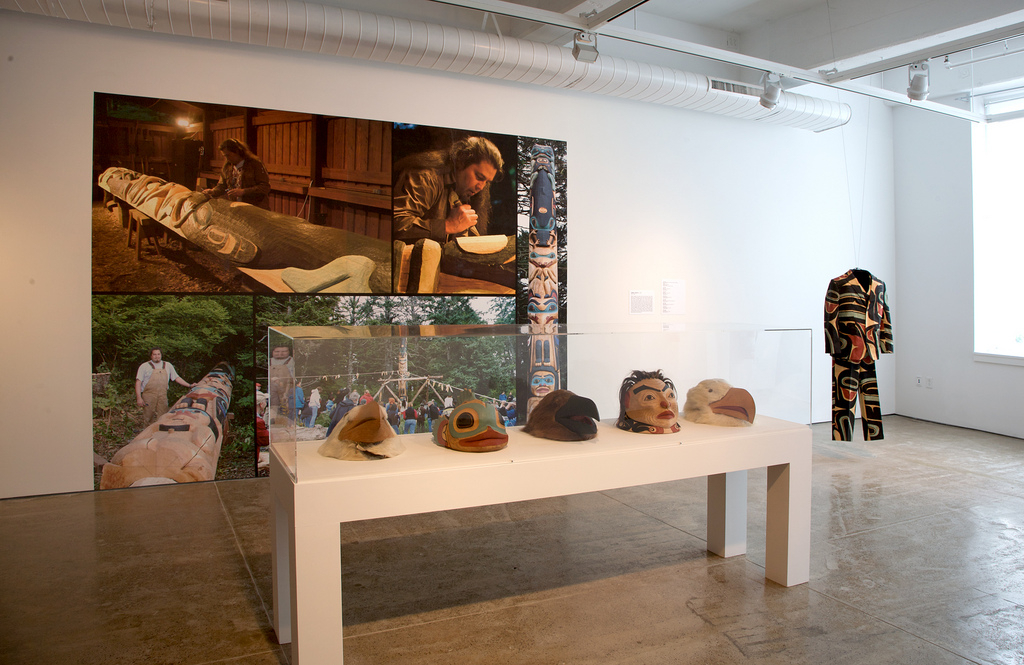
So, too, are Tommy Joseph’s carved animal headdresses and Tlingit Suit (2009), a man’s suit imprinted with Tlingit patterning. These works—in the tradition of tribal art-making—are great to see in Philadelphia, although the objects themselves are updates on natural history museum arti- facts.
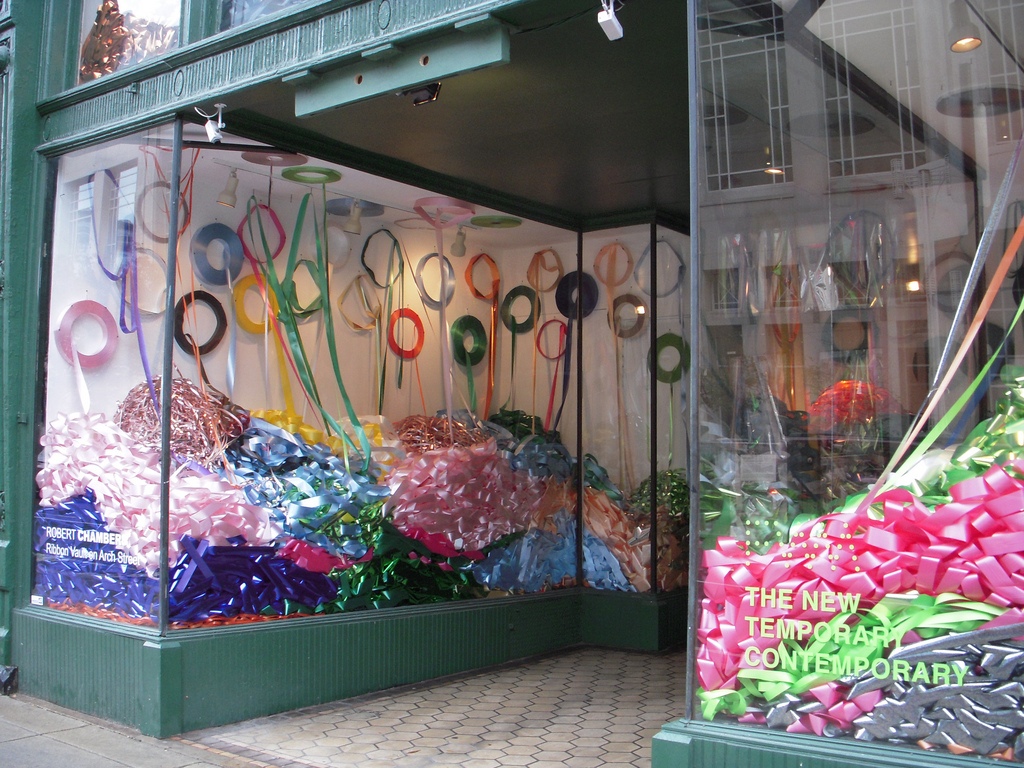
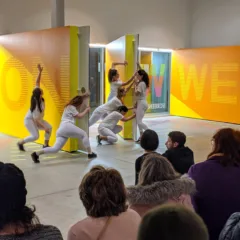
Robert Chambers—who performed a new piece, Silent Film Drop in Color at the opening, unraveling dozens of spools of colored cloth ribbon onto the street outside the museum—is the one artist whose work seems out of place. His sculptural model of two John Deere tractors welded together at the noses doesn’t reverberate with meaning. And while the ribbon performance at the opening was reportedly fun, the ribbons—now piled in the museum’s windows—seem like party leftovers and are unappealing.
“ New American Voices ”: Through Nov. 22. Fabric Workshop and Museum, 1214 Arch St. 215.561.8888.