

national » reviews, features & interviews

Car trip into Dixie

By

January 9, 2010   ·   10 Comments

Florida billboards are different from Philly billboards.

This I learned on a car trip to St. Petersburg, FL, for New Year’s Eve with friends. (With this beginning, I start a post that wanders without following the map. I go north, south, and back again. And I provide pictures that don’t follow the post. It’s my personal New Year’s challenge to you).
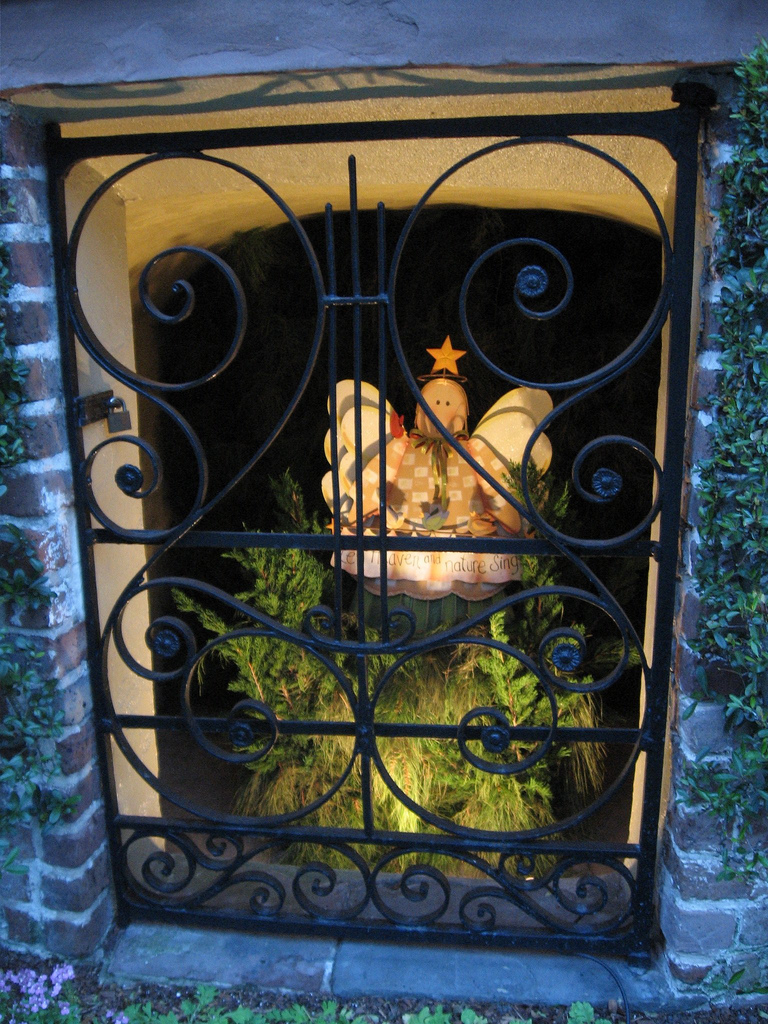
A Christmas display in a cellar window of a fancy Charleston house. The pictures in this post are mostly of random things that caught my eye.

A Christmas display in a cellar window of a fancy Charleston house. The pictures in this post are mostly of random things that caught my eye.

On the road four adults–Murray, Stefanie, Paul and me–jammed into our Prius. The trunk was barely big enough so we didn’t pack Murray’s shovel (for some surprise snow storm) or Steffi’s cooler with breakfast, lunch and soy milk.
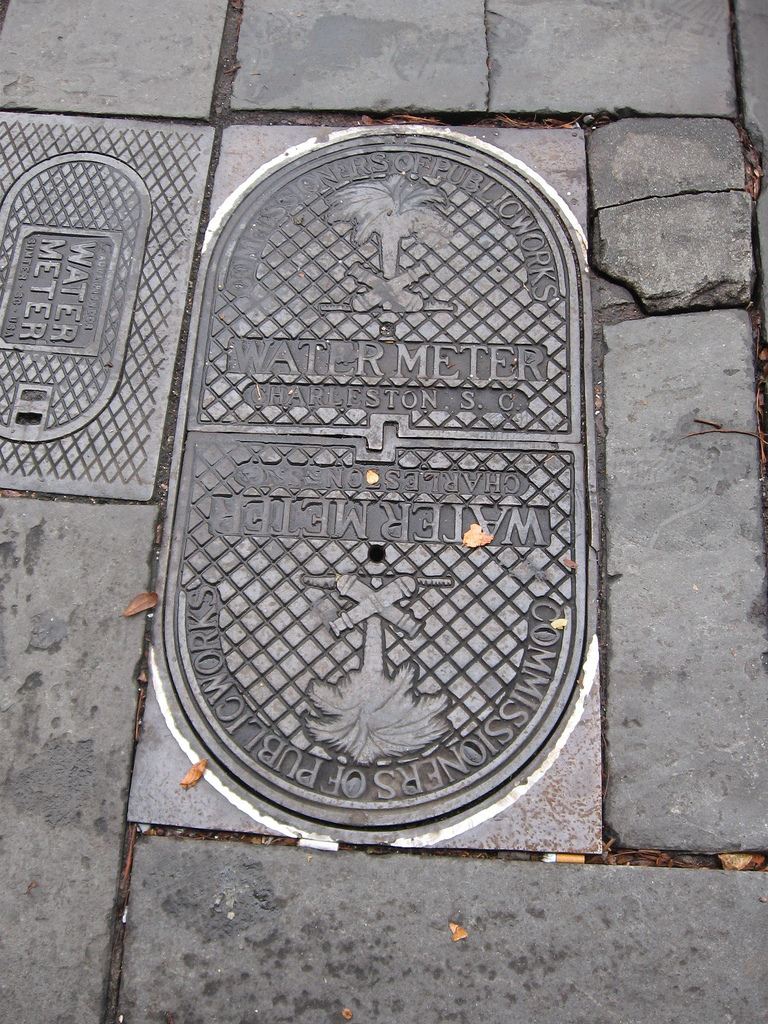
Charleston sidewalk water meter cover, decorated with palmetto trees, which also are on the South Carolina state flag.

Charleston sidewalk water meter cover, decorated with palmetto trees, which also are on the South Carolina state flag.

The New Year’s Eve party is a seven-couple tradition dating back 30+ years when the men all worked for the Philadelphia Inquirer–a time of idealism, a sense of public service, and live elephants in the newsroom. (Only one man is at the Inquirer now). This year we were six couples. Four from Philadelphia, one from D.C. (Paul and Stef) and then our hosts in St. Pete, Rick and Mariann.
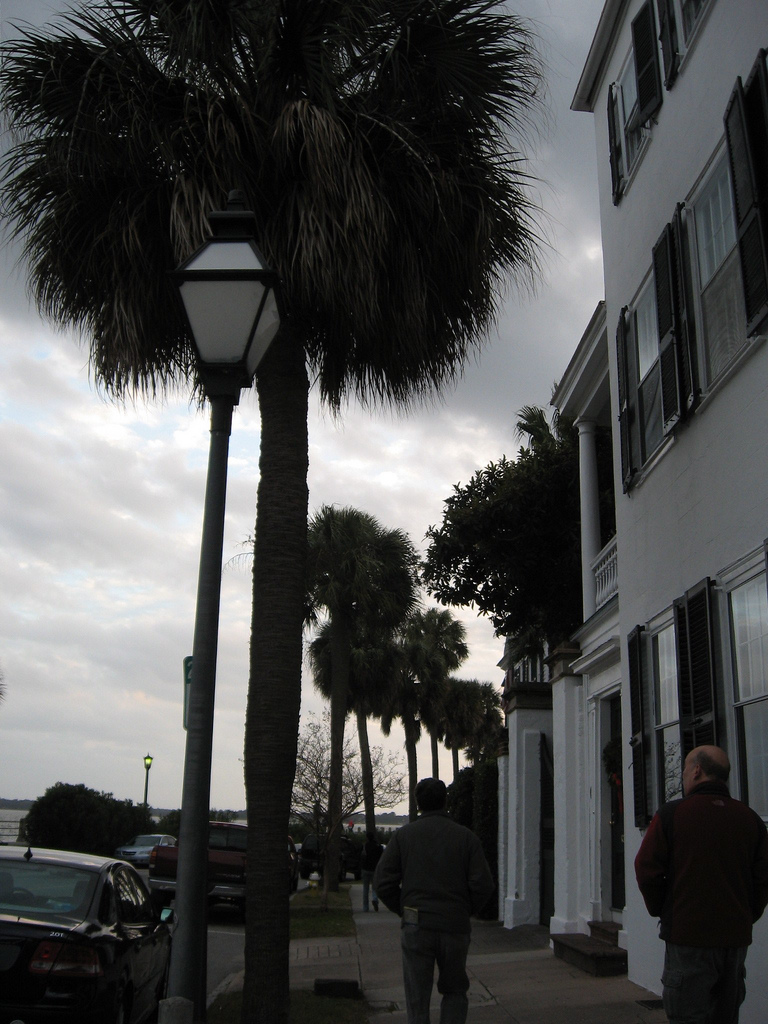
A Charleston street lined with palmettos.

A Charleston street lined with palmettos.

Our New Year’s tradition began in a modest way–a strategy for having a late night without hiring babysitters, and for having a fabulous dinner at a modest price–in which everyone contributed a dish. Our car trip, on the other hand, was not meant to be modest. It began as a more flamboyant plan. We were thinking all of us Northeast types would pile into a van, pump up the volume on the iPod, and party all the way down.
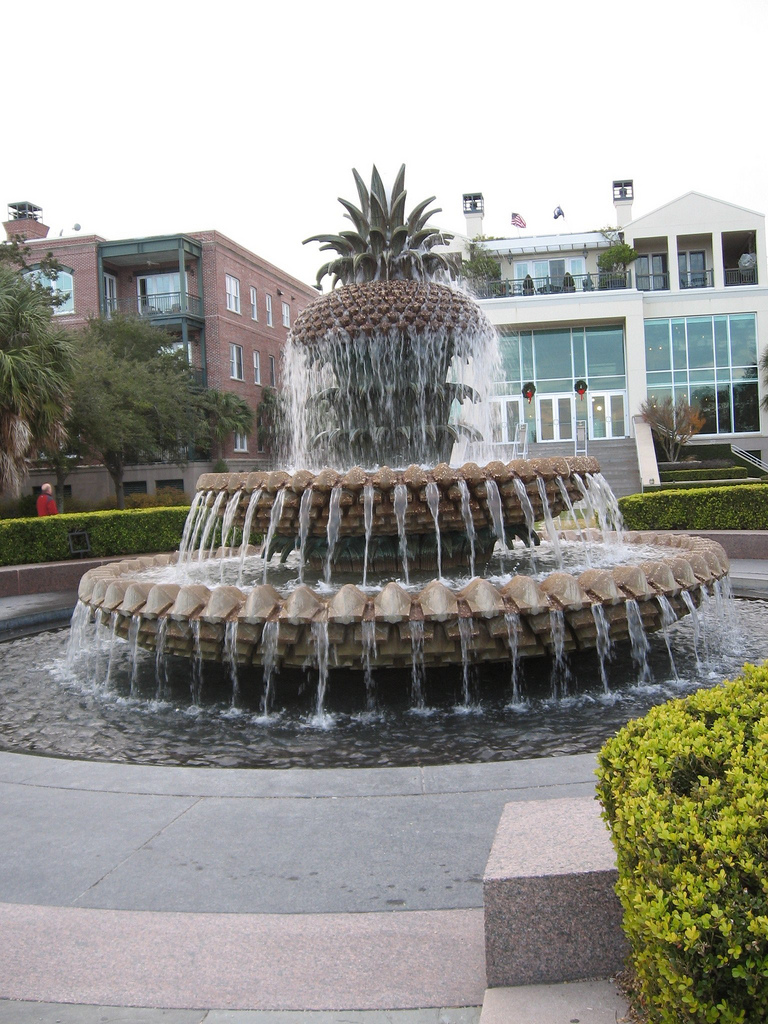
This wonderful fountain, inspired by a pineapple, is in Charleston's Waterfront Park; we saw a bridal party getting their photographs taken on a freezing day. Not sure how the bride survived in her strapless dress.

This wonderful fountain, inspired by a pineapple, is in Charleston's Waterfront Park; we saw a bridal party getting their photographs taken on a freezing day. Not sure how the bride survived in her strapless dress.

But we had dropouts. Only the Taylors and us were left standing–or sitting and driving. Maybe it’s silly, but we thought it sounded like fun. We stopped in Charleston going down, and in Savannah and Hilton Head coming north. More than 2,000 miles later we are still friends.
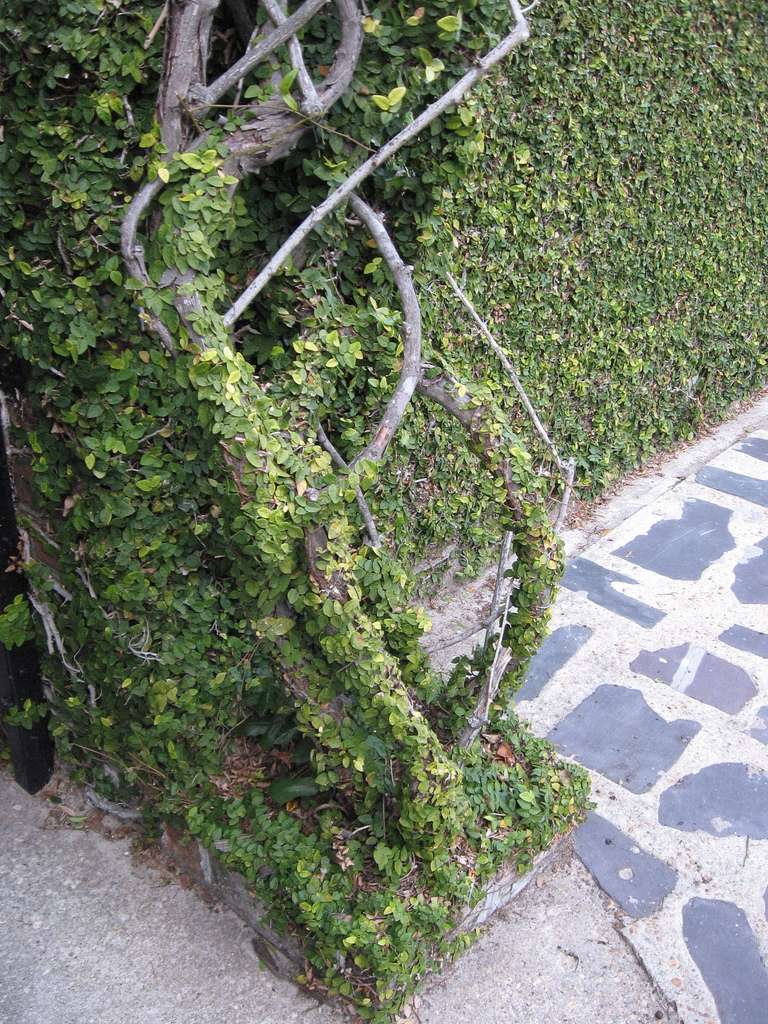
This viney creature coats these roots and the wall. We saw the same plant covering garden walls and front steps of houses. I don't know what it is, but it has a decadent aura--but not nearly as gloomy as Spanish Moss.

This viney creature coats these roots and the wall. We saw the same plant covering garden walls and front steps of houses. I don't know what it is, but it has a decadent aura--but not nearly as gloomy as Spanish Moss.

We had some logistical triumphs. At roadside rest areas we found coupon books for motels. Bargains!!!  And FREE!!! Hot Breakfast! became the baseline standard by which we chose motels so we could save some dough and make a quick morning getaway for our forced march south.
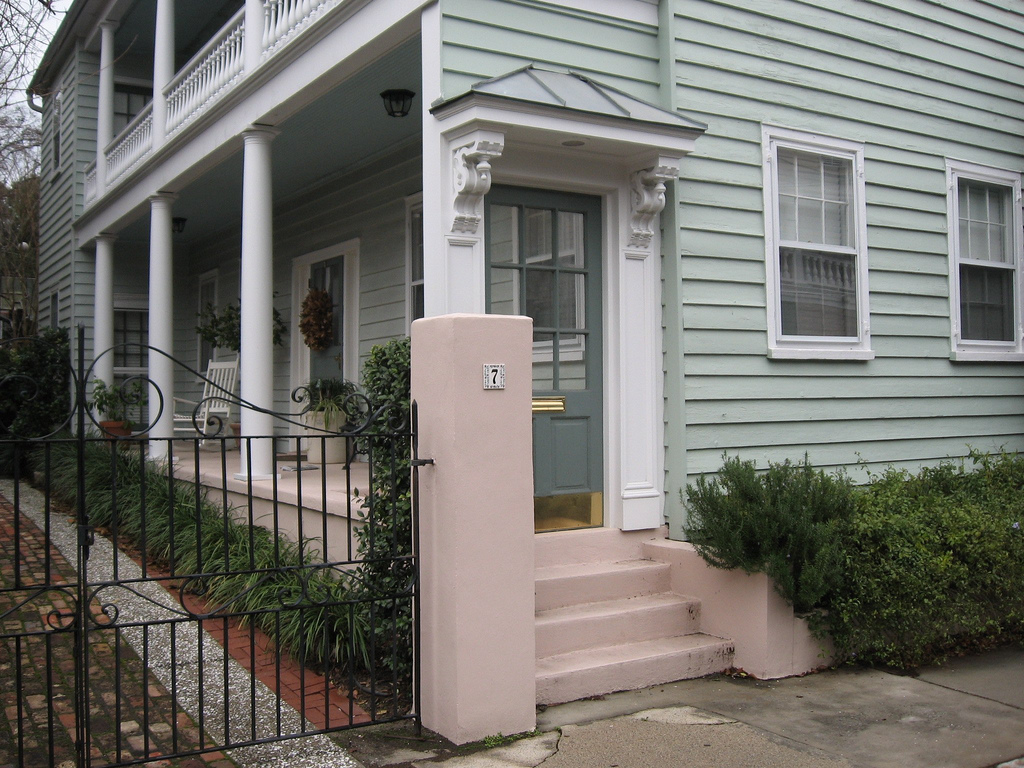
We saw a couple of these doors, formal entryways to open porches--or perhaps these are piazzas, the Charleston term for house porch/galleries!

We saw a couple of these doors, formal entryways to open porches--or perhaps these are piazzas, the Charleston term for house porch/galleries!

Charleston is like Philadelphia, with its Colonial Era housing, but it’s even more charming. The waterfront is part of the city, directly across from some historic mansions and  also encompassing historic battlements. A levee/walkway there protects the low areas. We actually came across a wharf named for one of the people in Murray’s book (due out in Sept.)
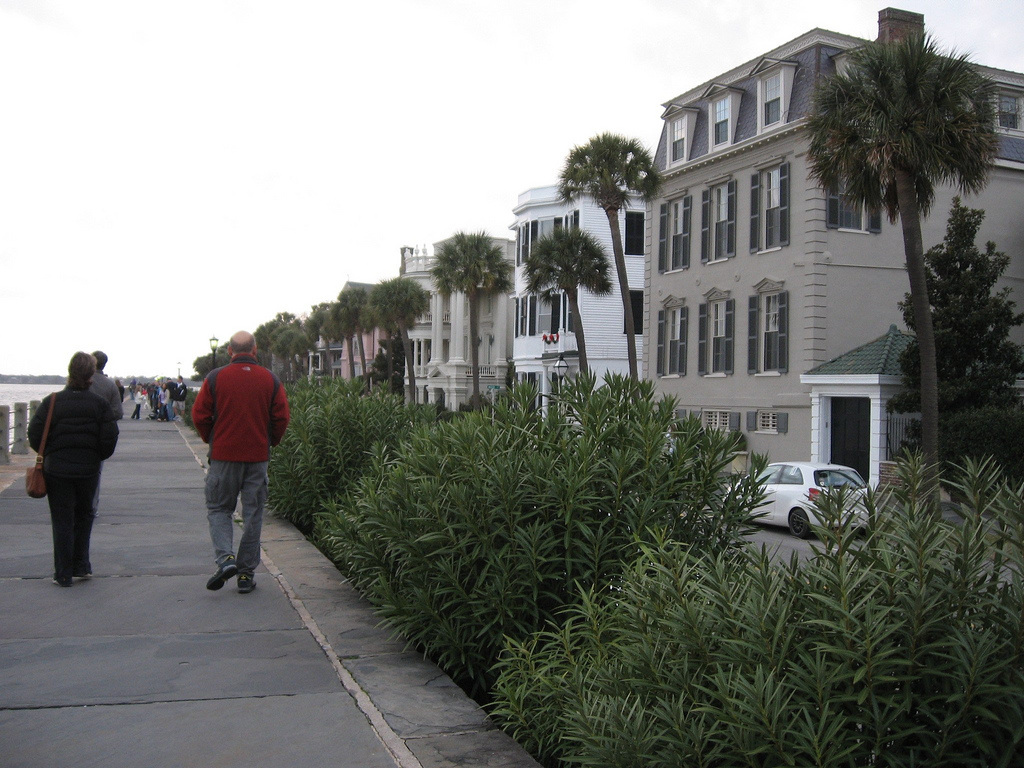
Stefi, Paul and Murray on the raised walk, that seems to be a levee between the houses and the water.

Stefi, Paul and Murray on the raised walk, that seems to be a levee between the houses and the water.

Savannah’s waterfront is at a lower level that takes you back in time to old cobbled streets and the Cotton Exchange. But at the same time the drop plunges you into a jazzy commercial tourist strip–not to be emulated, but still more accessible than what Philly has come up with, so far.
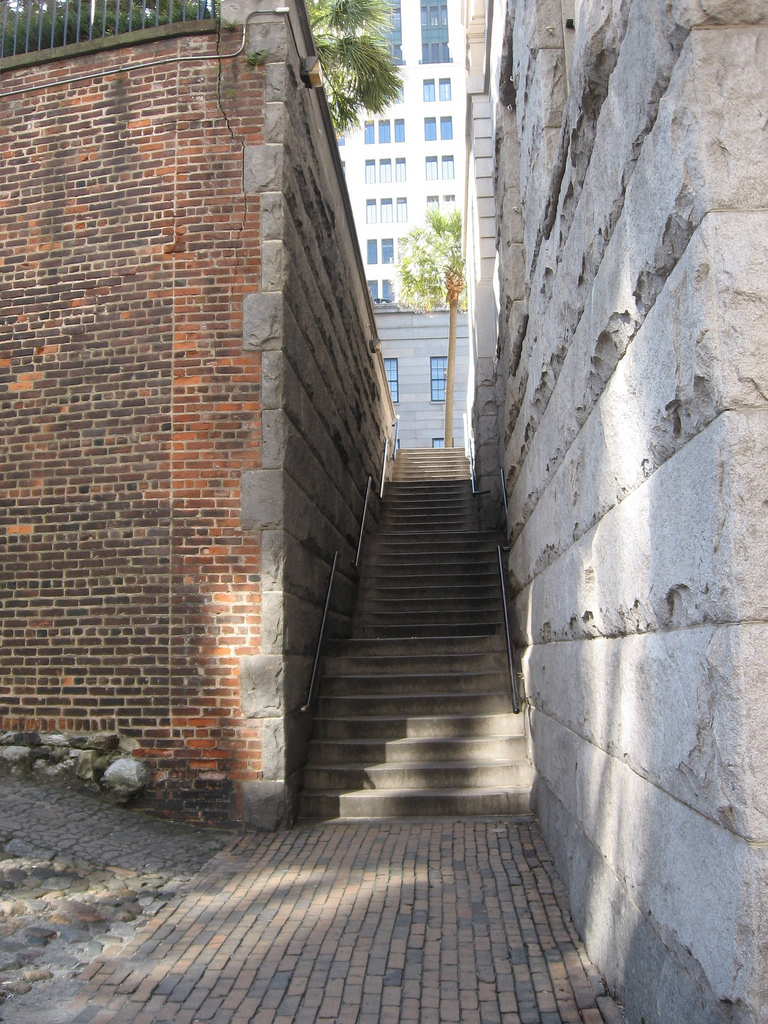
The bay front is on a level below the city. Some buildings have entries on the upper level, but the buildings also reach down to the lower level where they also have entryways.

The bay front is on a level below the city. Some buildings have entries on the upper level, but the buildings also reach down to the lower level where they also have entryways.

In both towns I saw a lot of public sculpture of civil war (rebel) and revolutionary war heroes, all done in the traditional inflated bronze style, both in Charleston and Savannah, and one depressing Holocaust remembrance sculptural installation for which the artist’s name was invisible. We saw all the donor names, however!
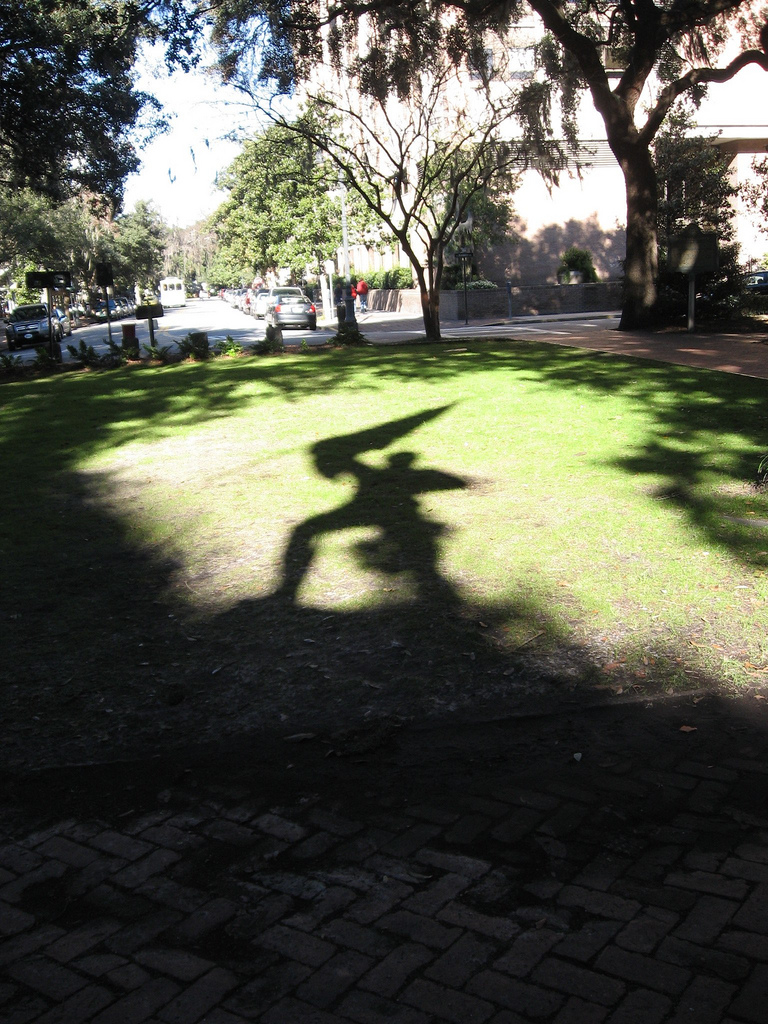
Shadow of sculpture of Revolutionary War soldier Sgt. William Jasper in one of Savannah's squares.

Shadow of sculpture of Revolutionary War soldier Sgt. William Jasper in one of Savannah's squares.

In Savannah we toured the house where the Marquis de Lafayette slept and delivered a speech. Our tour guide was soooo boorrred that we made it our mission to ask lots of questions. It worked. We also looked up the cemetery and house from Midnight in the Garden of Good and Evil. But if I had to choose between Charleston and Savannah, Charleston wins hands down.
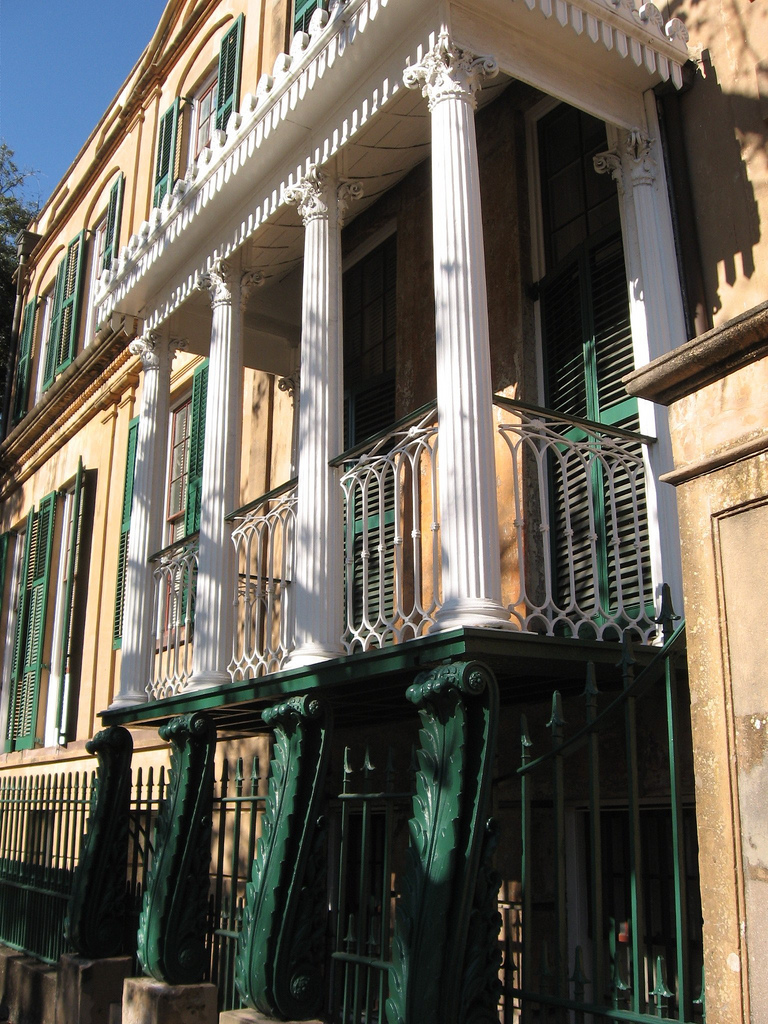
This is the balcony where the Marquis de Lafayette addressed the people of Savannah. He stayed in this house, the Owens-Thomas House, in 1825.

This is the balcony where the Marquis de Lafayette addressed the people of Savannah. He stayed in this house, the Owens-Thomas House, in 1825.

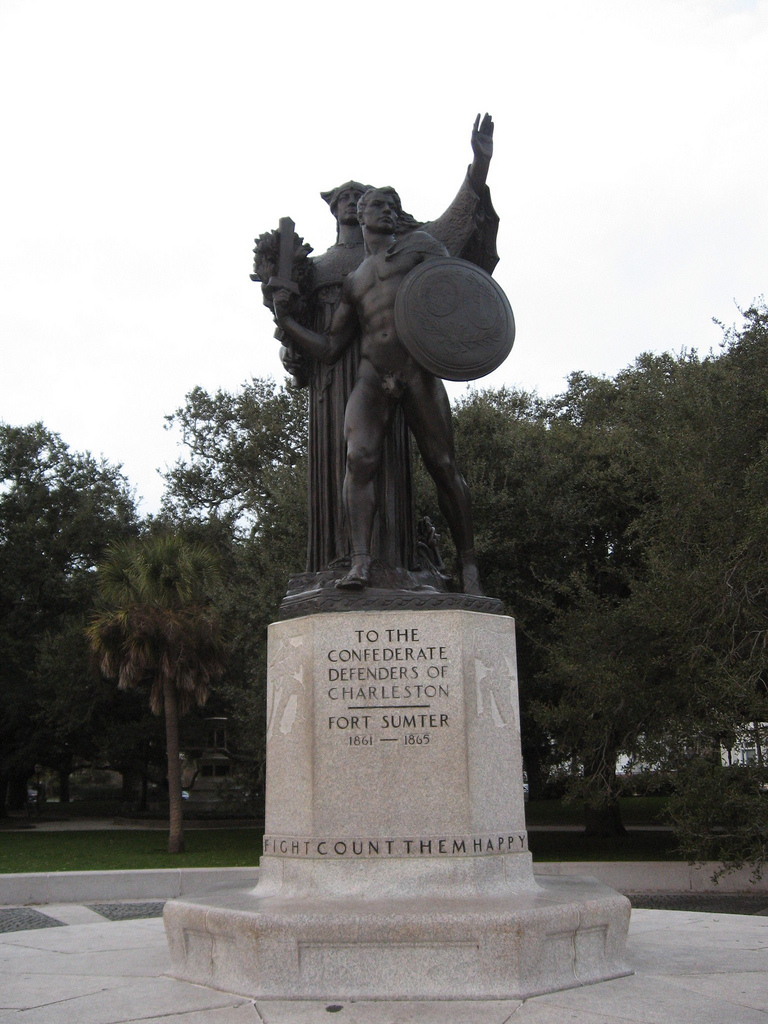
This almost pornographic sculpture honors South Carolina Civil War heroes.

This almost pornographic sculpture honors South Carolina Civil War heroes.

Two low points of the trip–Aunt Jemima-ish merch (she did have a cleaver in hand, but that didn’t seem to balance the stereotype in the least) in the official Charleston visitors center, and a barbecue chain decorated with Civil War memorabilia and rabid propaganda on the walls. Silly me. I thought we’d moved on from here.

Good eatin’
We ate some great traditional BBQ along I-95 at The Smokin Pig, a no-nonsense locally owned eatery in Richmond Hill, GA, with plank tables and benches. Yum. We found it thanks to a highway billboard. The owner was happy to hear his advertising investment had paid off. We had great fish at Hyman’s in Charleston (spun off by the fifth generation of Hymans from the family’s dry goods store) and great nouvelle Southern cuisine at Vic’s on the River in Savannah along the waterfront.
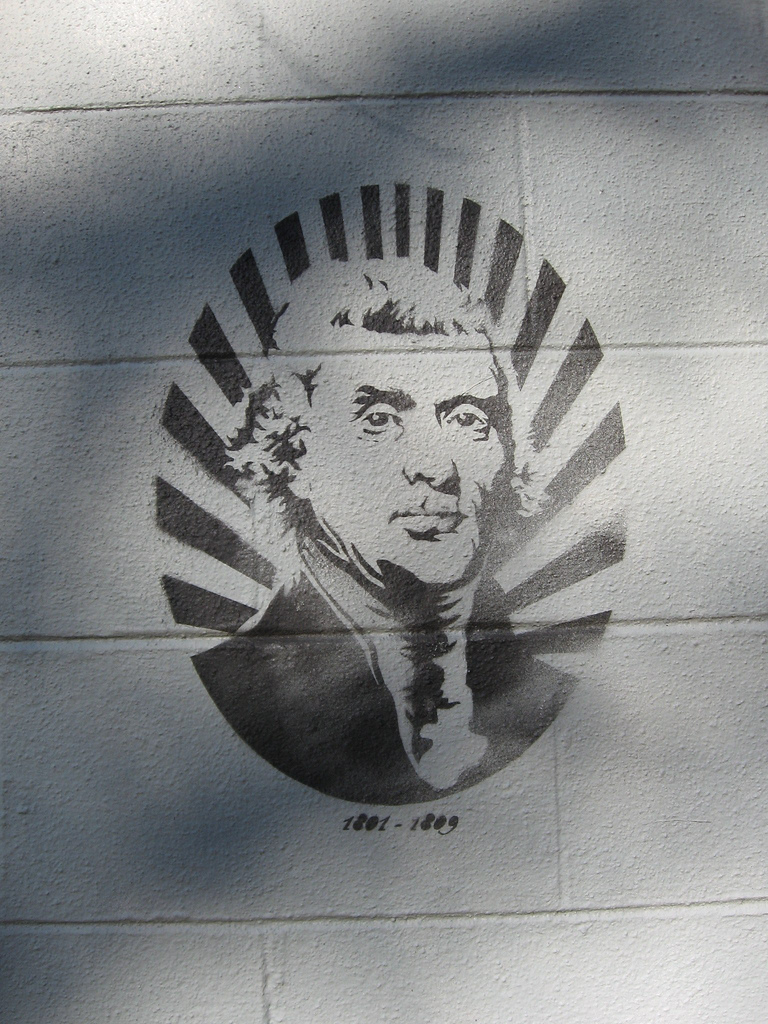
I admired this stenciled on a cinderblock wall in Savannah, on the back of a house. I have no idea who it is or who did it, but I loved the formal portrait as a stencil. Maybe it's political!

I admired this stenciled on a cinderblock wall in Savannah, on the back of a house. I have no idea who it is or who did it, but I loved the formal portrait as a stencil. Maybe it's political!

The billboards
Once we got past the billboards for South of the Border, outlets (wide shoes, cowboy gear, small men’s clothes, etc.) and Crackerbarrel, we got to Florida, home of the talking fetus abillboard (portrait of fetus with words like, my mother killed me at 18 weeks) and the anti-domestic violence billboard (who can argue with this one?) We had plenty of time to read them as we slowed down for the speed traps. Stefi, the ex-social worker, said domestic violence is pretty evenly distributed across all populations. So I guess they just worry about it more in Florida.
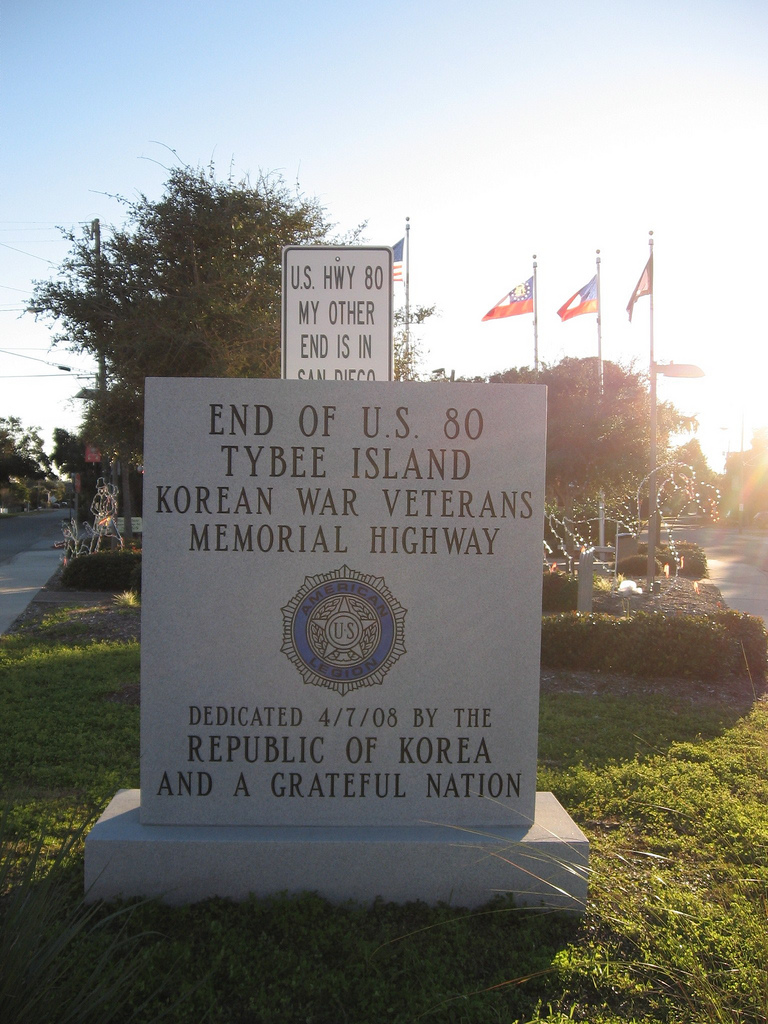
U.S. Highway 80 starts in San Diego and ends on Tybee Island outside Savannah. On a long car ride, a sign like this seems particularly meaningful.

U.S. Highway 80 starts in San Diego and ends on Tybee Island outside Savannah. On a long car ride, a sign like this seems particularly meaningful.

I want to give a shout-out to hosts Rick and Mariann and to old friends Beck and Larry, Bill and Diane, and Don and Gay. I didn’t take pictures at the New Year’s Eve party or the Official New Year’s Day Brunch.  And the cherry bomb on top of the cake were the St. Pete fireworks and seeing the Naughtons for brunch!!
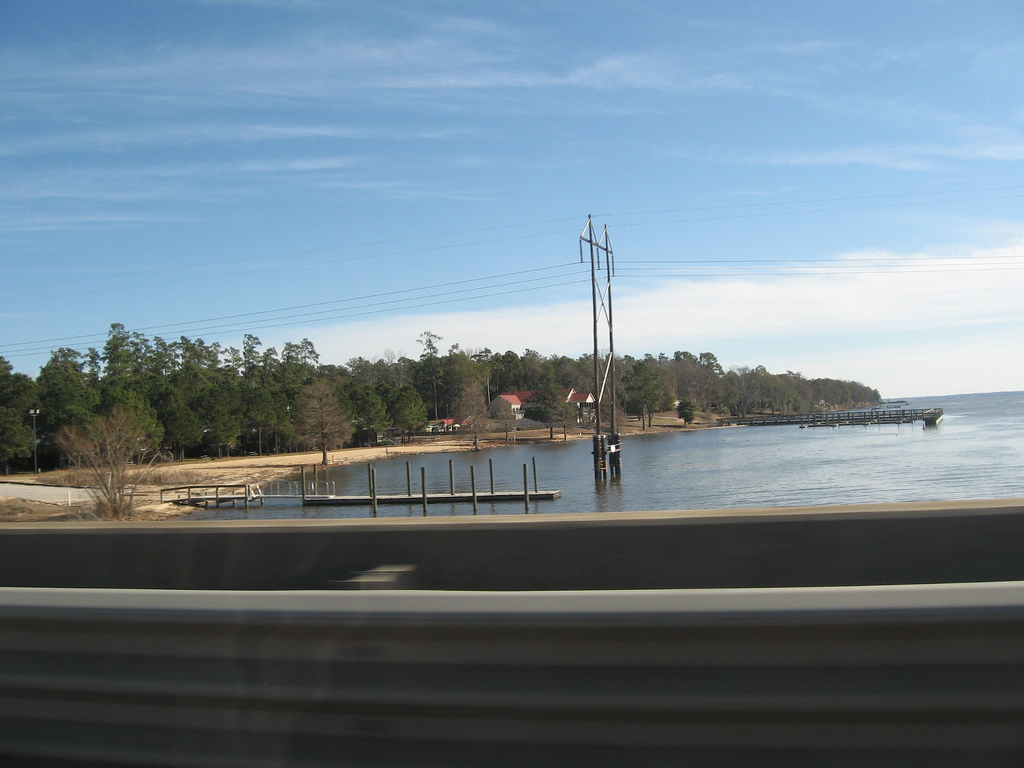
On I-95 we saw these DIY catenary structures made of wooden poles that still showed their tree shape. The modern communications lines held up by these wobbly-looking poles standing in water seemed odd and vulnerable to the elements.

On I-95 we saw these rustic catenary structures made of wooden poles that still showed their tree shape--at odds with the modern communications lines they held up. The wobbly-looking poles, standing in water, were odd and looked vulnerable.

I also want to give a shout out to our hosts on Hilton Head, Tobah and Andy! It was super. Tobah apologized for the bagels, which we enjoyed anyway. Quality bagel bakers of the world, an opportunity awaits you on Hilton Head.


Readers Comments (10)

  1. Rob says:

    Pretty sure the stencil is Thomas Jefferson.

     
  2. Bay says:

    Could that stencil be Jefferson Davis?
    I LOVE the “my other end is in San Diego” sign!

     
  3. Lucky Bogart says:

    Sweet.

     
  4. Rob says:

    Also, Jefferson served as President from 1801-09, like the dates on the stencil

     
  5. libby says:

    Ahh, thanks you two for your historical thoughts. Thomas Jefferson–I should have known. I just love that image. It’s kinda unexpected and on a primly painted white wall, prim even though cinderblock.
    Glad you liked, Bay and Lucky! I do think that end of the road singn was wild. It might not have thrilled me as much I suppose if I weren’t on a serious north to south journey that also had a sense of covering the miles. Or maybe I would have been thrilled. The distance cross country is momentous! The continuity is shocking, even though the country is crisscrossed with transcontinental roads.

     
  6. Ooof, having spent a couple years at the Savannah College of Art and Design, I’d of pointed you in the opposite direction of the waterfront. Did you happen to check out Forsyth Park? Or the poor areas of Savannah a bit more south than the park? Some amazing weathered businesses and hand painted signs.

    The historical preservation, though well intentioned, has sort of put a bland, white-washed sheen across the majority of Savannah (IMO)…but if you explore it’s outlying areas, its a pretty weird place.

     
  7. libby says:

    Hi, Shawn, we did look around Forsyth Park, but not the areas a bit more south. Sorry I didn’t know. I remember Savannah so fondly from a previous trip many years ago, but this time it seemed a little flatter. Bland is right. We did go to the cemetery in town and the Bonaventure Cemetery, just because of the book, and they were both pretty interesting as it turns out. I suppose cemeteries are like art–cultural objects that take on symbolic meanings.

     
  8. libby says:

    This came in from Marjorie Grigonis via email:
    Hey, I loved seeing your blog and pix. I also took a car trip to Charleston over Christmas, visiting old friends and sons, who through many unexpected connections have wound up living in Charleston. (They’re NJ and Philly boys.) An obvious link in the connections is that I lived there for 8 years. This was roughly ’77  - ’84, and I spent all those years trying, to get used to Charleston. It’s different now, but still heavy with the aura of the old South. The houses with sideways porches are called “single houses” and the story I was told is that during the time they were built, and they’re all over town, taxes were based on the frontage on the street, hence the skinny perpendicular to the street design.
     Somewhere today I read about a woman’s stop at the Ava Gardner museum, a stop I’d made many years ago (I think in or near Smithfield, NC) when it was just a room in a house. It’s a stop you would have loved, I think, had you known about it. Can’t believe you didn’t spend a lot of time at South of the Border.

     
  9. libby says:

    The Ava Gardner is an amazing place–once. South of the Border, too. Murray once wrote an article in the Inquirer about our stop at the Ava Gardner. Worth that first visit, definitely.
    Thanks for the wonderful info about the skinny houses. It’s one of those facts they forget to put in guidebooks that tourists would just eat up!