
Andy Warhol loved to take pictures of people, especially celebrities. Warhol was a potent combination of socially awkward and a voyeur; he killed two birds with one stone by frequently taking refuge behind a camera lens in social situations, and his prodigious output shows it: At the time of his death in 1987, the pop artist had amassed more than 60,000 snapshots and Polaroids of his social circle and celebrities.
After his death, Warhol’s photos became part of the Andy Warhol Foundation for the Visual Arts, and in 2008 the Foundation began putting them out into the world. It made gifts of historically significant prints to art museums and galleries that are also teaching institutions, including the Pennsylvania Academy of the Fine Arts, which received some 150 works.
PAFA has a selection of 23 Polaroid and 21 black-and-white prints on view in a small show that’s laid out, appropriately, like a time capsule or scrapbook—photos are grouped in a loose grid, with a lot of the same faces popping up multiple times.
The black-and-whites were Warhol’s personal diary photos, and they are the more visually compelling. Taken with a 35mm automatic point-and-shoot, the midsized prints may not be great art, but they’re great Warhol.
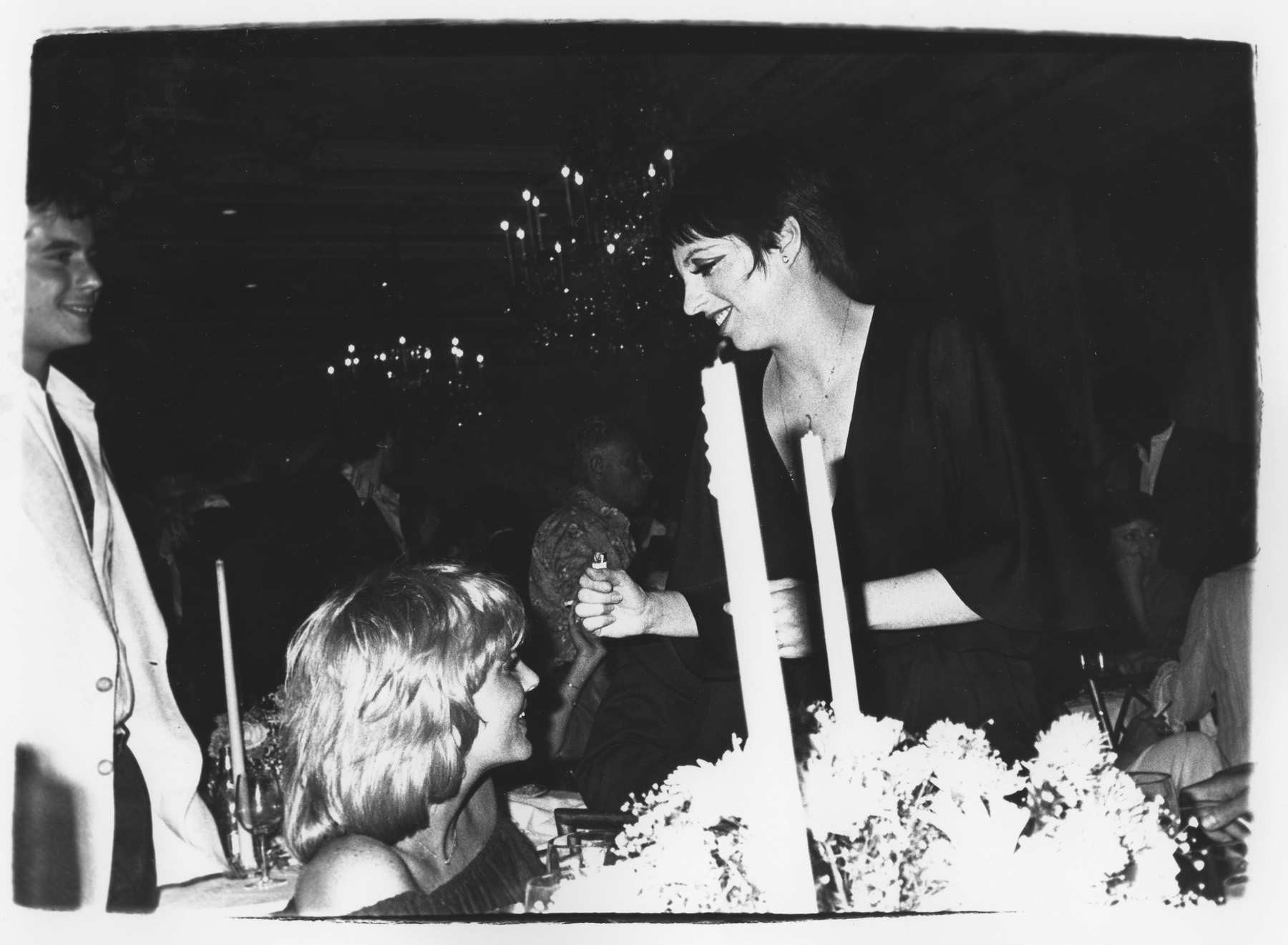
Liza Minelli, captured in profile at a party, is one of the best shots. The white light of the flash washes over the standing celebrity, who looks like she may be going out for a cigarette with what looks like a lighter in her hand. Minelli’s sister, Lorna Luft, is seated at a table, with an unidentified man standing to the left. The background is black except for a few small lightbulbs in the chandeliers. While the composition is not great—the unidentified man should be cropped out and two aggressive candlesticks in the foreground are phallic and weird—there’s a sense of the bright-burning, tragic star reminiscent of Warhol’s Jackie, Marilyn and Elvis portraits.
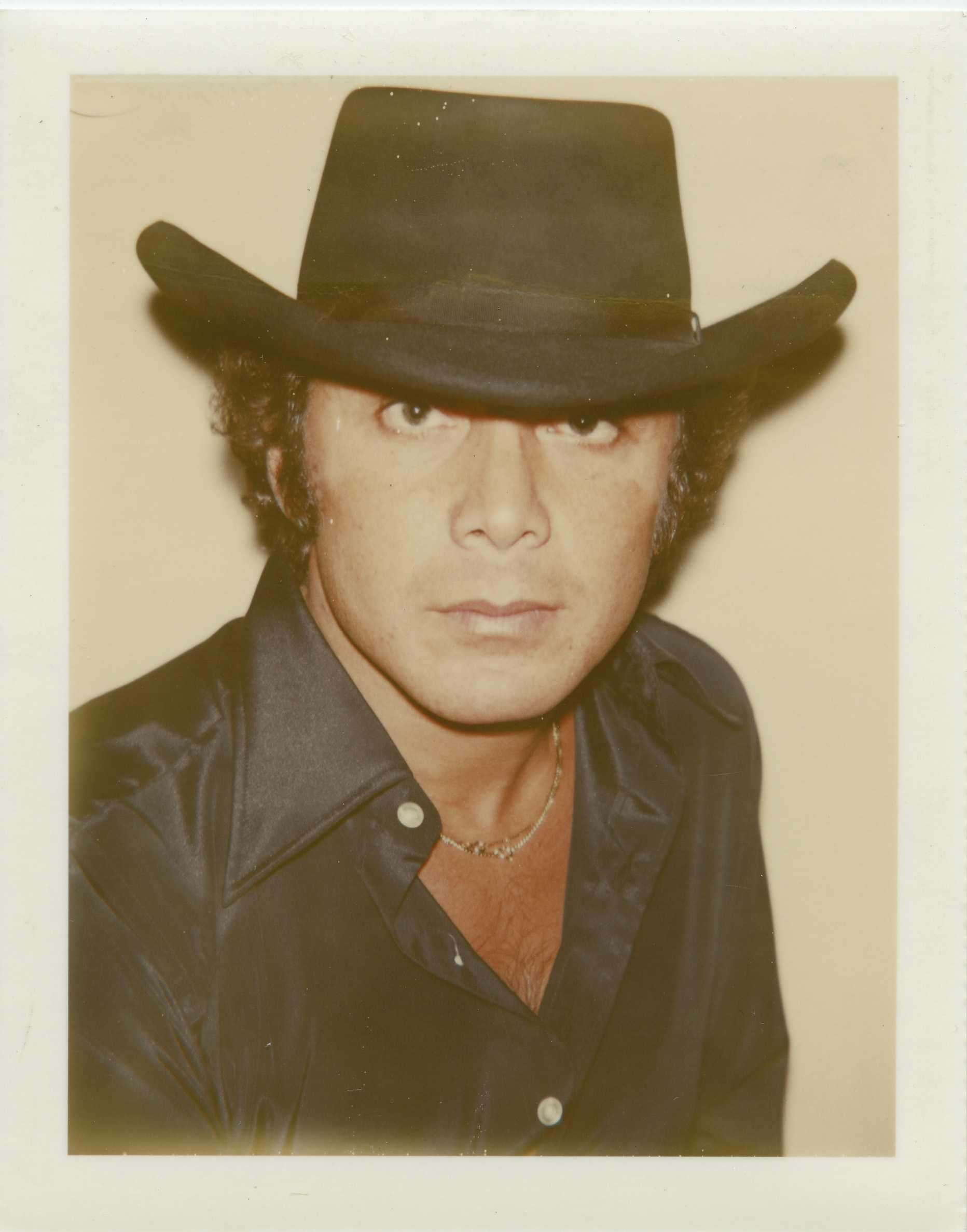
Polaroids were the basis for Warhol’s many commissioned silkscreen portraits, which helped make the artist a millionaire. (Emile de Antonio, a filmmaker and one-time friend of Warhol’s, tells a story in the 1987 documentary Andy Warhol about how the artist came back from a two-month trip to Germany saying he’d made 50 Polaroid-based silkscreen portraits of German industrialists and their families, each of which cost $50,000. As de Antonio says, you do the math.)
Looking at the Polaroid collection at PAFA, you may experience sudden moments of déjà vu recognizing source material for Warhol’s later works, or just because there’s many of the era’s celebrity faces in here as well: dancer/choreographer Martha Graham, Olympic skating champ Dorothy Hamill, ’60s pop star Paul Anka, starlet Pia Zadora.
Far more than The Brady Bunch or That ’70s Show, the small photo exhibition immerses you in the era with real people wearing real suits, dresses, jewelry and hairstyles. There’s an almost anthropological charm to the show, since many of the people portrayed are unknown today, their 15 minutes of fame having long expired. Pia, Hugh Downs, Neil Sedaka, Henry Geldzahler—they’re like some lost tribe from Planet Disco.
It’s ironic that Warhol—whose famous 1968 quip about 15 minutes of fame seems so creepily prescient more than four decades years later—is still exercising his 15 minutes. Warhol is bigger than an art star: He’s an art galaxy. Here, he lends another 15 minutes of light to those whose own flame burned out long ago.
Read this article at Philadelphia Weekly.
Andy Warhol Polaroids and B&W Prints
Through Sept. 12.
PAFA
Walter and Lenore Annenberg Gallery
118-128 N. Broad St.
215.972.7600