
Author’s Preface
Red Ghost is historical fiction, so, based on a true story, with fictional characters surrounding historical ones who centered the story. The nativism at the heart of 1832 Philadelphia could be found throughout the slave holding colonies, as each new immigrant group faced a hard entry into North America. As the story unfolded, the research grew, as each character developed, the research took me deeper into what Philadelphia really was like in the cholera years. I wrote this during the pandemic, finding many parallels to current day.
My own family is part Irish, and part Scots. My great grandmother emigrated from Cork, Ireland, and they lived in a tenement on Coney Island Avenue underneath the overhead trolley. So my interest in immigration comes from our experience and just wondering what it may have been like in PA for the Irish. — Clayton Campbell
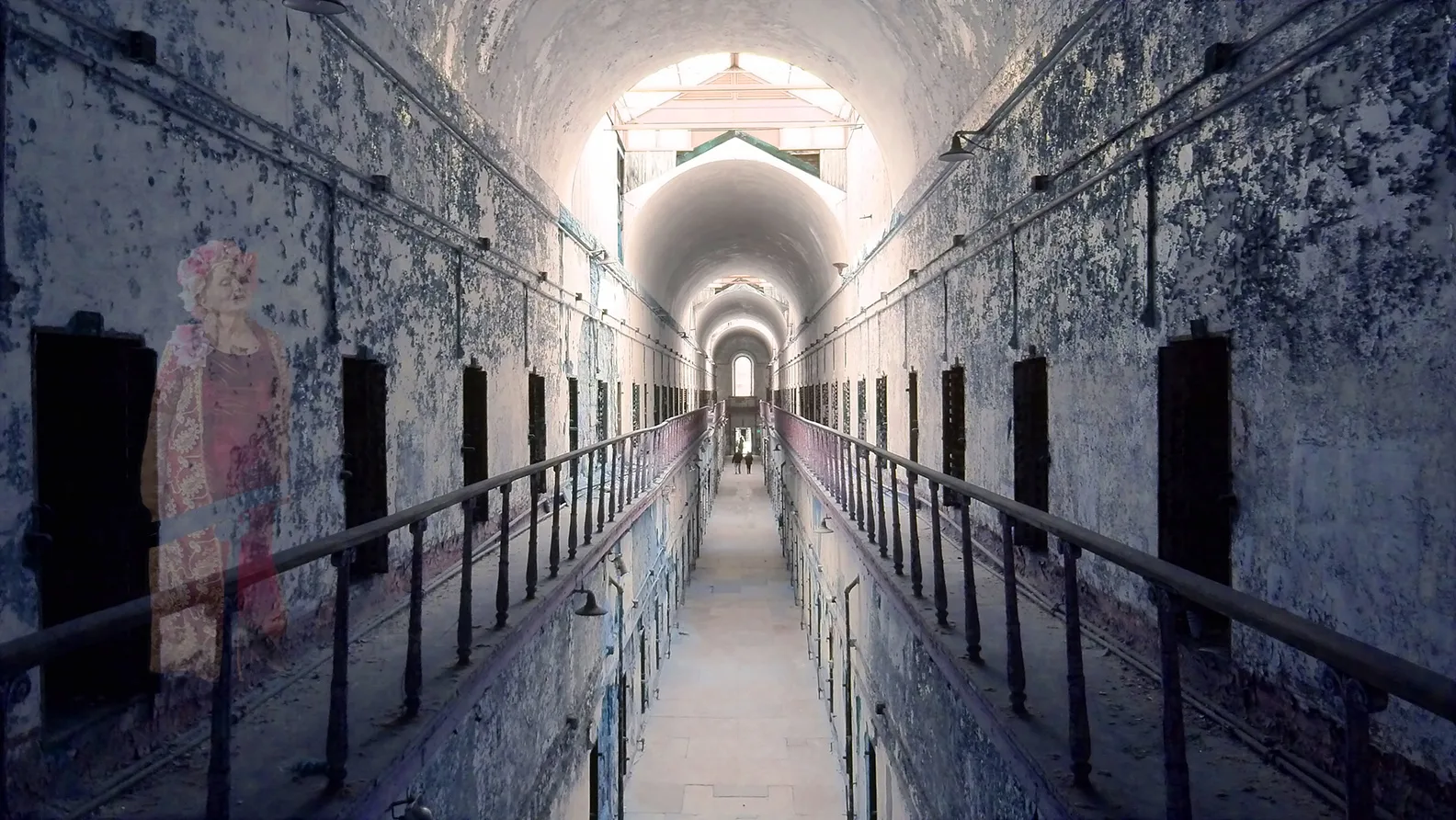
The Red Ghost of Eastern State
By Clayton Campbell
Read this story offline by downloading the PDF here – CLAYTON-CAMPBELL-RED-GHOST-New-PS
It was July 1832 on a restless, muggy, hot County Tyrone night. Sheelah turned her aching body over in bed to look out into her room. Years of working in the sod had stiffened her joints and ruined her back. The old stone farm cottage where she had lived her life seemed stifling, close quarters in the dark. It was here, in a puddle of blood and love she had given birth 29 years earlier to daughter Catherine. Sheelah had watched her husband pass away in this cottage from hunger and gout, a stricken body with ribs poking out at crazy angles. The past months Catherine’s husband lay dying in the room of tuberculosis, spitting up red phlegm. Not even Sheelah’s formidable curative powers, known to the Tyrone people far and wide who would come with all manner of ailments came from miles around to supplicate for Sheelah’s cures, could save him. He died in Catherine’s arms, a man she barely knew anymore, wasted, hollow eyed, gaunt.
The air smelled of wet dirt. It filled Sheelah’s mouth and nose, choking and oppressing her. Trying to rouse up, a heavy unseen weight pressed on her chest, pushing her back down into the straw mattress. A faint whisper of a sigh exhaled in her ear, a moist, sweet familiar breath. She knew it well, yet the hearing, the feeling of it, froze her. She was crushed on the mattress as if a ton of peat was just laid on her grave. Sheelah knew, with the clarity of age and ancient wisdom, that her Catherine, just a few weeks gone now to make a living for them both in the Americas, was dead.
Gathering herself, she sat on the edge of her low bed frame, and slowly, painfully stood up. Crossing the room to her dresser, she searched in it for a moment, then took out and carefully put on her rose red velvet dressing gown. Continuing to dig she found her brocade-wedding jacket that had been packed in linen, and wrapped her thin frame with it. Lastly, Sheelah donned her bonnet with the dried flowers. Some of those dried flowers were coinnle corra, the bluebell. Picked from the hedgerow, it signified constancy and everlasting love. But the bulbs of coinnle corra were poisonous, and Sheelah believed if you heard the bluebells ring, it would summon fairies to their gatherings. She knew too, no human must hear those sweet ethereal sounds, unless you were prepared to make your passing into the realms of death.
She waited, thinking, staring at the floor for a long time. A dog barked somewhere, but that was all. She was looking deep inside her heart, and it was sinking in. The feeling that Catherine was gone had arisen from the place in her where the ancient knowledge came from. Before Catherine had boarded the wagon taking her to the Derry docks and then on the boat for the Americas, they had been together one last time. Sheelah knew her daughter held within her being the inner sight and she was of age to use it wisely. She took Catherine’s face in her hands, and looking into her eyes, exhaled a mist of coinnle corra. It gently filled her daughters’ nostrils with love. Speaking verses in their Gaelic tongue, together they chanted they would both be safe to see each other again. With this memory fresh in mind, burning Sheelah like hot coal embers falling about her from a fierce fate, she thought perhaps what she had passed on to Catherine had not worked. All of her abilities, her woman’s blood sacred wisdoms, the secrets of the old ones, and the many healing incantations seemed to have failed. Walking to the door Sheelah pulled it open so the dog would not hear and follow, and stepping outside into the gloom softly began making a low keening sound only a woman of Eire who knows loss can make. Picking through the gorse so as not to catch her garments on their thorns, the darkness shrouded Sheelah. She felt that come morning she wished to die. Soft peals of bluebells sounded. Her path took her to the cliffs on the edge of the village. Catherine would be out there in the mists.
The same year Philadelphia was celebrating the new Eastern State Penitentiary. It was the model of penal reform, a humane, systematic approach to treating criminality. Plaudits from around the civilized world showered down on the advocates of this innovative venture in human redemption. The building of the prison had been led by the Pennsylvania Society for Alleviating the Miseries of Public Prisons under the direction of one Bishop William White. He too, was the talk of the land. And, he never missed an opportunity to let people know about it. As the good Bishop was fond of showing off, prisoners were to be housed in solitary confinement for 23 hours a day. They had a Bible to read, one small window at the top of the cell wall symbolizing the eye of God. Upon this light of omniscience, they were purposed to reflect. The redemptive blessing of having solitary time to ponder one’s sinful nature was felt sure to alter the character of the inmate for the better. Indeed, it was far cry from the miserable dank holes criminal wretches were thrown into heretofore. The Penitentiary’s innovative radial architectural design was a wonder all commented upon. A massive gothic building on the outskirts of Philadelphia, it was literally built like spokes around the hub of a wheel, allowing guards to observe all the incarcerated, while themselves remaining unseen.
There were the occasional detractors of this novel approach to penal reform, of course. Muckrakers and do nothings, said the good Bishop. Charles Dickens was one who spoke up, calling the isolation imposed on prisoners a “form of torture.” When questioned, the prison physician acknowledged instances of insanity due to isolation. But he attributed this largely to African American prisoners, whom he viewed as predisposed to mental illness because of their “unique” nature. Historically, there would always be a disproportionate number of dubious African free men and ‘slaves gotten bad’ at Eastern State. They were rivaled in numbers only when there was a crushing wave of immigration. At those times, the city was unable to house the suddenly large numbers of immigrants. With their awkward presence, poverty and homelessness increased, the crime rate went up, and the ‘foreigners’ would be blamed. They quickly filled up the Eastern State cells. In the 1830’s and 40’s the Irish, fleeing British induced famine, land seizures, and longstanding racial oppression, came in droves to Philadelphia. It was their turn to fill up Eastern State Penitentiary. Activist and humanitarian of the day John Neal, when thinking about Eastern State Penitentiary, expressed revulsion at the international reputation of ‘a nation that broke away from all its bands and fetters, only fifty or sixty years ago — overthrowing prisons, palaces, and thrones in her march toward universal emancipation; now already renowned throughout the whole earth, for her prisons, her manacles, and her badges of servitude.’ Such was the underbelly of truth of Philadelphia, July of 1832.
One hundred sixty men and women took ship sailing out of Derry, Ireland on the schooner John Stamp, headed for the port of Philadelphia. It was a sunny, brilliant June morning. The crossing would take many weeks, the schooner going slowly, overloaded with wool goods for the markets of the Americas. All of the passengers were Redemptioners. They had foregone paying the cost of the crossing, and the captain would advertise the redemption contracts they signed upon arrival in the ports of Eastern America. He already had one buyer, an Irish contractor who needed a good-sized group of Irish Catholics to dig ditches. The Protestant Irish were of a higher class and got the better paying and less strenuous jobs. Ditch digging was not for a good Protestant in the new land of America. Cleaning out horse stalls and emptying public latrines was the niche they occupied.
The contracts indentured each man, woman and child for years until they could pay back not only the cost of the voyage, but extra fees that would be charged for boarding, food, clothes, arrival tax, and surcharge upon surcharge. The average servitude term was seven years, some more. Many did not live past their term to pay off their contract, as conditions were so harsh. They had no rights, no care, and were worked harder than slaves, who as property cost up to $1000 each. They had a high value as investment and property. They were not disposable like the Irish Catholics who, if they died, were simply replaced by the next one off the boat. They cost $20 a month to maintain, and thus were considered expendable. Any businessman needing labor knew this, and exploited the immigrants as a matter of course. None of the passengers, as they set out that morning, had any idea of the consequences of what they had signed, few could read English, and those who did failed to understand the intentionally confusing legal contract jargon. The State of Pennsylvania was always a leader in the use of indentured servitude, had fine- tuned it into a booming business. In the 1830s-1850s it was the turn of the Irish to feel this whip.
On the ship women and men were mixed together in close quarters under the main deck, sleeping three to one bed. Conditions were horrendous, filthy from the last voyages. Everyone took toilet in two large pots, dumping the contents off the side of the bilge each day and night. Provisions, bread, whiskey, and moldy cheese, were laid on for four weeks. The average journey lasted six weeks, so food was rationed to the famine plagued Irish saving the shipping company money. Losing some of the passengers to hunger and illness was not that much a concern. The real concern was if an epidemic illness broke out, and the ship would be quarantined upon entry. Tensions grew below deck, privacy was impossible, filth piled up, people fell ill with stomach ailments. When the John Stamp reached the coastline, it headed up the Delaware River and stopped at the first quarantine hospital in the country; like Eastern State Penitentiary, another Pennsylvania innovation. Cholera was raging in Europe, and efforts were being made to stop it before it came ashore. All passengers were checked, anyone ill was taken off, after which point the ship could proceed to Philadelphia. No one on the John Stamp had the pox or cholera. They made port half starved, with twenty dead. But still, thought the captain, it was a good crossing, all in all. Those losses were expected, it was normal, and he covered for it by raising the cost of the passage.
Among the Irish immigrants looking to make their way in the promise of America was Catherine Burns, daughter of Sheelah. She had had decided to take leave of home in Clonoe, County Tyrone when her husband had passed away from hunger in that famine season. The men had been giving whatever food stuffs they had to their women. But with no men to look after them their property might be forfeit, and the Great Hunger was upon all of Eire. Catherine joined the human wave heading away from the Irish famine after seeing an advertisement on a wall by a fellow Irishman, a contractor offering paid work, good housing, and ample food in Philadelphia. She planned to send money back to Sheelah. Catherine had no luggage except a small valise with one change of clothes, and some coinnle corra. Six foot tall, she was a truly big woman for her time, large boned and strong. Used to tilling the fields, cutting up peat, and dragging a plow, Catherine knew labor and expected it. She had loved deeply, known loss, wanting now to just bury herself in honest work and make a new life. She had come across the Atlantic feeling sick and dizzy, but seeing the piers and docks of the city, the bustle of life, a new world was opening before her, along with a light of hope lit in her chest. Catherine had not felt this for so long, what with the misery, constant rain, rotten potatoes, hunger, deaths of loved ones, but especially the feeling the old Goddesses had abandoned them.
The good ship John Stamp docked, and was roped to the iron mooring rings at the Washington Avenue Immigration Station. This was a bustling seaport filled with dust and the din of animals, cargo being unloaded, people rushing through the alleys, cobblestone streets hard under foot. It was alive with the vibrancy of a new land where a newcomer might have a chance to make their way, rise up in class and stature. Philip Duffy, a middle aged, prosperous Irish contractor originally from Donegal, who worked for the Philadelphia and West Chester Railroad, was waiting on the Landing. Duffy was an ambitious man, having arrived years before, working his way up the social ladder from someone who had also once stepped off a boat. He landed in 1798 escaping the rigors of the Irish Rebellion. By the War of 1812 he was naturalized. And now, in 1832, he was a prosperous contractor, an independent man who had made his way, just like the promise of America had held out to him.
Duffy was a smart man, and industrious. He had arranged to buy out his own redemptioner contract, making the money he needed in crooked card games on his passage across the ocean. From there it was nothing but continuously ascending the social order. He became even more clever, conniving, smooth, and hardheaded. As some would say, he was becoming the model of the tough, new, Yankee businessman.
Duffy had done this many times, standing by the piers, awaiting newcomers to disembark from the schooners that had brought them from Europe. Duffy knew most came from Donegal, Derry, and Tyrone, and wouldn’t speak the American language, or know the local ways, or have any money. They would need work, food, shelter, and would trust another Irishman to make a deal for them. He was ready to bid on their redemption contracts and buy himself some Irish Catholics.
The Railroad Company had approved his bids a few months back to dig and lay their track beds coming into Philadelphia. Duffy had a successful business doing the raw demolition and preparation of the train track beds. He’d found a niche by taking on the most difficult work, so brutal that slave owners would not allow their slaves to participate. The people who Duffy would assign to indentured servitude, the Irish Catholics, were considered the lowest of the low at the time, and they were willing to do the work without complaint.
It made Duffy’s job easy. He had two things going in his favor at this moment; being Irish his ability to gain the trust of and recruit Irish immigrants to work for him for next to nothing, and the acumen to buy their redemptioner contracts then reselling them for substantial profit. His Protestant upbringing did not cause him pause about what he was doing to these people. Instead of exploitation, Duffy saw it differently. He saw it as God’s plan, with himself helping these poor souls from their blasted corner of Eire to have a small chance to survive. He was doing God’s work, as far as it went.
Things had been going well that past spring season, but now Duffy was in a jam. Mile 59, 30 miles outside of Philadelphia near Malvern, and between Paoli and Frazer on the Main Line track, was proving very difficult. He’d taken this contract knowing that the last bit was a cut through a small mountain of limestone. It was the most expensive contract in the entire 82-mile train line. He had lowballed the bid to get the job, thinking he could pick up a quick few thousand with the cheap labor he had, but now Duffy was a week behind, $7000 over budget, costing him a small fortune. He needed a quick solution to cut his losses. So Duffy did what Duffy usually did. His current crew of immigrant Irish working for almost no money, had begun to wear out and slow down. He quickly sold their contracts to another boss to make up the $7000. He had a little left over to buy a new group. He was thinking he could get by just feeding them bread and cheap whiskey, sheltering them in the large barracks he had found up in Malvern. He turned to his gang boss, Mór Mac Lugh, and gave him the nod to find a crew of 57 persons.
Mór Mac Lugh, or Big Son of Lugh, was an unusually tall, imposing man, sort of a stereotype of the thick-necked Irishman who drank hard and thought with his fists. He hailed from Kilkenny where they play the rough game of Hurling. It has been played since ancient times, and Mór was one of the best. Lugh is an ancient name, associated with the Tuath Dé, a supernatural race of ancient Irish who were the Celtic Tribe of the Gods. Pre-dating Christianity, the god Lugh was a warrior, king, master craftsman, savior, or all at once. Lugh’s attributes were inventing and excelling at ball games, and was commonly referred to as Lugh of the Long Hand, for his prowess with weapons. His great hound Fer Mac, invincible in a fight and possessing its own magical qualities, faithfully followed Lugh. Lugh was not a common name at the time because of the seriousness it placed on the recipient. In the old country it remained a sacred name and was not given lightly. It may have been a misnomer for Mór Mac Lugh. He didn’t quite seem the kingly type or cut out of savior cloth. But Mór was a fierce fighter, quick to make decisions without remorse. He stood tall and blonde, like Lugh of old with a sling for throwing stones draped across his chest. He had the warrior in him, to be sure. He had a brutal kind of handsomeness. The locals called him Mór Mac, but never said the sacred name Lugh aloud in his presence. It seemed a profanity.
On the Hurling pitch he was known for playing defense, holding the stout hurley stick, the camán, in one hand like a mean weapon. His other hand was balled into an iron fist. The camán measures between 18 to 38 inches long with a flattened curved bass at the end. For a proper fit, a man would hold it by his side and the stick should reach from his lower hip to the top of his shoes. Mór Mac used the biggest stick there was at 38 inches, fitting his girth and stature. On the pitch he stood a full head above all the others. He used the camán as a deadly mace, and he would try to stave in the head of his opponent rushing in to hit the sliotar, the small hard sphere of cork covered with leather that was the hurley ball. Many a young man paid a costly price in broken teeth and ribs thinking they could best Mór Mac by out running him to the goal line and smack in the sliotar for a score. The rowdy fans in Kilkenny would chant the nickname Long Arm during the games, mainly for his habit of savagely cutting down his opponents. Hurley is one of the toughest games. The players wore nothing protective, just came ready to rough it up. Many a man of Eire was expert in the game and just as tough as Mór Mac Lugh. But none were quite as violent, coming right up to the line of fair play and outright mayhem in almost every contest. Games have rules of conduct, hurley being no exception, yet Long Arm Lugh didn’t seem to care. After a champions match between Kilkenny and Waterford ended with Mór Lugh breaking the skulls of two of the noble sons of Waterford, it was generally thought best he depart that night for the Americas lest a mob from Waterford burn down the outskirts of Kilkenny. To make sure he departed, a crew of men from Kilkenny dragged him to the outskirts of town, tied him up, and threw him on board a wagon. They had had enough of Mór Mac, and he had no friends that night as the wagoner headed towards the docks of Derry.
Making his way to New York City on a steam schooner laden with coal, he worked as a boiler stoker. Upon landing he soon found employment with good tips as a bouncer at a saloon in the Five Points district, a disease ridden, crime infested slum where the Irish were living. Called the Dead Rabbits Saloon, after one of the neighborhood Irish gangs, it was located in Paradise Square at the intersection of the Five Points. It was a space where men, often with little means, obtained sorely needed escapism. It was also an anchor point in a world that could be cruel and uncaring. The saloons gave alcoholics the opportunity to fuel their addictions, obliterating their health under a cascade of gut-rot spirits. The criminal element was found on the fringes of saloon culture. Mór Mac fit right in.
However, here too he wore out his welcome when he cut up a brothel lady who was bound to one of the local Irish gangs, the Forty Thieves. Being hunted in Five Points, he took off again before he had to answer for his misdeeds to the owner of the brothel, who had a reputation of killing men for fun. This time Mór Mac managed to arrive on a barge at Penn’s Landing, where Phillip Duffy would be waiting. Duffy appreciated the size, strength, and wildness of Mór Mac, in fact saw great potential in his abilities for himself. He quickly bought out his redemptioner contract. It was now in its fourth year of seven, and Duffy extended it to ten, offering Mór Mac safe harbor of a sort. Over time they had developed a fine working understanding. Discovering Mór Mac’s streak of cruelty and modest intelligence, Duffy eventually promoted him to be his top gang foreman.
Pulling the tired, hungry, and gimpy sea legged Irish onto the dry land of America, Mór Mac plied each one shots of whisky as they stepped off the gang plank. Then they received half a loaf of bread with a small folded paper bag with old cheese. Inside was also ten cents. Without waiting, every redemptioner signed or put their thumbprint on a document he waved in front of them, the servitude contract that now bound them to Phillip Duffy. Mór Mac gathered them round, told them about the good, solid, clean work they would be doing, the wages they would be making starting with the ten cents they got today as an advance. They would have a roof over their heads and separate toilets. It would be a great start in their new country, and how fortunate that they had met him at just the right time, brother and sisters of Eire! It sounded like heaven to the 57 tired Irish who stood there starved and swaying from their sea voyage, confused but relieved that someone was looking after them. Pretty soon he was piling all the men and women into wagons. They pulled out of town, were given more whiskey, and by nightfall all were sleeping on the floor with a thin blanket in a large barracks in Malvern near the Mile 59 cut.
Catherine was one of them. Standing tall, Mór Mac saw her right away. She caught his eye, this big girl with a thick shock of reddish hair. Skinny, ethereal from hunger, and with an uncommon presence, Catherine gazed back. Mór Lugh liked spending his time with the ladies in the brothels, but none of the Irish girls were there yet. That is what he liked, and missed, Irish lasses. So being courteous and all, he tipped his hat, invited Catherine to sit up front with him, out of the scrum of the others trying to fit into the crush of the wagons.
Catherine was no fool, and could take care of herself. But it looked better up front than in the back of the wagon, so she accepted Mór Mac Lugh’s invitation. Giving him a stern look that clearly indicated she would know what a man was up to if he was out of line and she could handle herself thank you very much, she sat beside Mór Mac. He gave her an orange. Catherine appreciated the gesture. By the time they made it to Malvern under cover of darkness, she and Mór Mac seemed to be getting along, in a civil, respectful way.
The Irish, speaking Gaelic and little English, knew nothing of the customs of America. Like many immigrants, they were clumped together, segregated and forced to live outside the norms of civilized behavior. They didn’t know about the Nativism infecting the country, how hated they were as outsiders, mistrusted, considered expendable, or as carriers of disease, viewed as subhuman. Duffy didn’t visit the site at Mile 59. He lived miles away, and let Mór Mac Lugh manage the crew, who ran a tight ship. Shifts for the ditch diggers were16 hours, with one break for food and whiskey. Crews were staggered so the trenching went all night. Progress was slow, Duffy was getting impatient, time was his money. Only Catherine got a break. Mór Mac would let her go after 10 hours to return to the barracks for a good rest and soon after he would go find her. If the others noticed or complained, they would feel his anger. He hadn’t had a relationship with a woman that was only carnal. For that matter, he had never really spoken with a woman as a person, since he considered them a form of chattel, a truth he hadn’t comprehended to be only a notch below his own status in America. But this woman was different. She could look right through Mór Mac Lugh, seemed to understand him, know his deep hidden hurts, and was able to get him to open up. Haltingly at first, he would sit and talk with Catherine; about the old country, about the new, about life ahead, what he had done, who he thought he was, what he hoped to become. His dreams and suppressed ambition to be more than a thug were new thoughts, and he felt but could not name the transformation he was undergoing. He told her about growing up an orphan when his mother died, and father took to drink and vanished. He lived on the streets with his wits, becoming tough and feared. Catherine listened, occasionally commenting, brewing them both cups of coinnle corra tea. There was nothing physical between them, something he normally would expect. But it was okay with Mór Mac. He had become oddly shy with this big Irish gal whose green piercing eyes held such sway over him. When he finally realized that he hadn’t ever had a polite conversation with a lady, something soft awoke. It was enough to converse together, to slowly let a piece of him come to life that had been sound asleep. Catherine’s face, so white after the events in Eire and the time on the ship, began to have the hint of a rose color. A week, ten days went by. They were becoming close. Mór Mac became more and more protective of Catherine, dousing the complaints of favoritism from the others with the biting swat of his camán.
In June of 1829 cholera appeared in a pile of contaminated rice in the Ganges delta in India. It spread along trade routes to Central Asia and the Middle East. By the autumn of 1830 it had reached Moscow. Word began to spread throughout Europe, causing deep fear. Cholera was a terrible disease, its origins unknown, and its treatment still unavailable. Death was unpredictable and swift. A healthy person could be strolling through a park at midday, begin to feel ill, and by nightfall be dead after eight dizzying hours of intense vomiting and diarrhea. Almost no one recovered from the onset of this kind of choleric attack.
By 1831 it had passed into Poland and France, and by early 1832 it was in Britain and Ireland. The general public of North America, suspicious of new immigrants and science they didn’t understand and feared, were reading and trembling about the coming plague, dreading it. They were convinced immigrants like the Irish, African slaves, or prostitutes carried and spread it. They were also absolutely certain that doctors were behind it, since anyone with cholera died in the hospital if taken there. They’d heard the bodies were used for vivisection; an infamous practice known as Burking. There was great suspicion and talk that the Irish killed their own or kidnapped children, selling the corpses to the vivisectionists. The Protestant middle class was certain that moral rectitude would prevent catching the disease, and that the flood of incoming Irish Catholics with their drink and promiscuity would bring cholera with them.
And then it arrived, coming from Canada down the Hudson River then over to Pennsylvania. When it came to New York, it prompted Philadelphians to clean the streets and any dirty place they could find. The newspapers spread fear that the general dirty and filthy conditions of parts of the city, with their miasmas or smells, were the cause of cholera. Most of these areas were where the immigrants lived. Alarm and rumors abounded. Persons who were sick with anything were suspected and taken away. The paranoia was reaching a crescendo just as the good ship John Stamp’s human cargo arrived in Malvern.
Catherine had been working, even with Mór Mac’s benevolence, like a dog. All of the Irish had. Mile 59 was a treacherous stretch of rocky hillside. Wielding pickaxe and shovel, it took all of them just to scratch away a few feet a day. The constant rain in the unbearable summer heat sent rivulets of mud pouring down the slopes of the cut, filling up the bottom where they worked, soaking their feet. The heat so parched the workers they often went to a stream nearby and drank from it. When they got back for the brief period of sleep at the barracks, they flopped exhausted on the floor, covered themselves with a thin blanket, hardly able to eat the dark bread passed around for dinner. They slept uneasily until woken by a whistle 6 hours later. Still damp, shivering, and tired as hell, back out to the cut they went.
On one of the days in that first week a squad of British officers and city planners, who had recently disembarked from another ship from London, arrived to see the new railroad works. They were interested in this engineering marvel and how they might apply some of the engineering for their own work back in the British Midlands. Two of the party’s man servants complained of having intestinal disturbance. This was nothing unusual in the New World. Most everyone who came over got at least a little sick from the water. The two men were shown the slop buckets in the barracks, where they relieved themselves. After what seemed like quite a while, they came out looking worse for wear before they moved on. That night, when the Irish line workers came back, they relieved themselves in the same buckets. When filled up, they picked them up to take them out and dump them in the nearby stream where the workers drank, upriver from the mile 59 cut. Tired, the floor damp and slippery, one of the men tripped and his bucket tipped, spilling the slop and human mess on the floor. Several more got to cleaning it up with their hands, shoving it back into the buckets, as they had no mops. It was disgusting, and there was no clean water to wash up with. But it had to be done. They scrubbed their hands in the dirt outside, then wiped them on their pants. The workers went to sleep more miserable than before, if that was even possible. Catherine had been outside talking with Mór Lugh, and they had spent their time looking at each other, talking softly. Something was happening between them. Emotions were passing back and forth, and a trust had built. Maybe, Mór Mac thought, I can save up enough to buy her contract from Duffy and get her out of here? Maybe, she thought, Mór Mac Lugh and I were meant to meet? Getting late, she went back into the barracks to bed as the slop buckets were being carried out the door past her.
In mid-July the first case of cholera showed up in the barracks in Malvern. The workers were terrified, they knew what cholera meant, and it meant death. Word began to get out to the local citizens, and they began to panic. Immediately the Sisters of Charity sent four nuns who were nurses to help the Irish. The locals found out, and in a rage of anti-Catholic sentiment forced the nuns to leave and walk 30 miles back to their convent in Philadelphia. After the second and third cases erupted, several of the workers broke out of the barracks fleeing to nearby towns asking for shelter. The terrified locals, upon seeing the filthy, run-down Irish begging on their doorsteps, turned them in to the village constabulary. A vigilante group formed. They were sent by the East Whiteland Horse Company owned by the Pratt family. It just so happened the Pratt’s also owned the land Mile 59 was located on. They had a stake in cleaning this up, they needed the railroad to go through so they could collect on their own contracts for use of the land. A cholera outbreak could sink their fortunes.
The constable brought the workers back to Mór Lugh and reprimanded him to keep his Paddy’s under control, or else. The barrack was locked, work stopped on Mile 59, in a spot called Dead Horse Hollow. The Lenni Lenape natives, before they were driven off the land, knew it as dark alley. It had always been a cursed spot. A day went by, and more Irish workers started to fall ill. They were dying. Mór Lugh had them quickly buried outside the barracks in makeshift coffins, nailed shut to keep the bodies from spreading the plague. He was trying to hide the evidence, contain the outbreak. But it didn’t matter. The remaining Irish were banging on the walls of the barracks, yelling to be let out. They could be heard a mile away. By nightfall a large, excited mob from Whiteland marched towards the barrack. Exterminating the cause of the disease was in their minds. These Irish spread it and it was their fault. If gotten rid of, the pandemic would not get started in their towns and hamlets.
Mór Mac Lugh was worried and wasn’t sure what to do. He felt responsible to keep the job going, protect the crew since Duffy owned them, and especially to protect Catherine. He realized that in a few minutes this frightening situation might be totally out of his hands. He stood outside the barracks, on guard so no one could escape. These were also Duffy’s orders. All Irish were to be kept there, no matter what happened. What that might be had been left unspoken yet understood between Duffy and Mór Mac. He could hear Catherine, asking for him to open the door. He was torn between duty, and the soft spot that had opened for her. Making a calculation that there were probably more dead inside who needed to be pulled out and buried before the mob came, he opened the door halfway.
Mór Mac took Catherine by the hand and brought her outside with him. He ordered two of the men to get the dead bodies, bring them outside, and drag them to the side of the barracks. They quickly complied when he raised the camán, as he barred anyone else from getting out. Mór Mac then slammed the door shut and locked it, not before he had one last look at the faces of his frightened work crew staring back at him, eyes wide in the shadows, their silhouettes flickering green and yellow by the light of the lit coal brazier inside.
As Mór Mac and Catherine watched the cholera infested bodies brought to the side of the barracks, they could hear and see the surly vigilantes approaching. Torches lit up the dozens of men coming their way, giving them a ghoulish cast. They were coming fast, their faces covered with cloth masks, gloves on their hands, swinging smudge pots emitting billowing clouds of acrid smoke to quell the miasmas. The two Irish workers were hurriedly digging a shallow grave to throw their dead comrades in, hoping to cover it up before they were seen.
It was too late. The mob spotted Mór Mac, Catherine, and the gravediggers burying their own. Rushing upon them, the mob descended with arms and axes upraised. The Irish workers held their hands over their heads, trying to ward off the blows and crying out for mercy. They were cut down, skulls crushed in by repeated blows meted out by the mass of murky figures. Catherine backed up, leaning into Mór Mac for protection. Together, with their height and wild look from days of working in the mud and rain, they cut an imposing sight, almost like a heroic sculpture of the Irish giants and gods of old. Mór Mac enfolded Catherine with one massive arm, and with the other, raised his hurley stick. He just stood there with his menacing long arm and teeth barred like the great hound Fer Mac. The mob held off, pausing, not sure who, if any, would rush in first to strike the blow. Catherine, her face white and wild red hair being blown by the smoke and wind, was becoming calm and resolute. Maybe Mór Mac Lugh didn’t realize but she knew there would be no stopping the mob. This was the end for her. And in some way, she didn’t care. Her eyes were seeing far away now, the foresight of Sheelah having come upon her in the madness of this fraught tableau.
Catherine pulled a small silk bag from her pocket, and dropping a pinch of coinnle corra in her mouth, chewed on it till its aroma filled her senses. She recognized the killing instinct that was all around her. The British had brought it to their villages on many occasions. She could feel it in her back, coming from the chest of Mór Mac Lugh. He was welling up with all his enormous rage, pent up anger, and inner bestiality. At the same time the soft spot in him was fighting for recognition. In the delirium of this inner struggle, he felt that no one in the mob would hurt his Catherine, he’d kill them all first.
Stepping away and turning around, Catherine faced Mór Mac. The crowd quieted, the clouds covered the three-quarter moon, and the world waited in stillness to see what would happen next. Coming close to him, Catherine took Mór Mac’s wrists in her hands, holding them firmly, pulling the camán down to his hips, and looking into his eyes. He was stilled, his jaw going slack, his blood at bay. He could begin to feel the future he had been daydreaming about with Catherine passing away. The love he was keeping for this girl, who had undone him like no one before, was so tender even with the crowd pressing in. Very quickly, feeling time running out and the moon beginning to come from behind the dark clouds, Catherine kissed him slowly and deeply, exhaling a thick mist of coinnle corra into his throat, nose, lungs, into his very being. She thought of her mother, sending out a silent cry of love, feeling certain she would hear. Mór Mac, smitten by their first and only kiss, felt souls of the dead pass through him, hurting his heart so keenly he cried out loud. He looked down at Catherine, understanding her intense gaze, as she nodded in recognition and lowered her head before him. It was time. In the delirium of his inner struggle, he knew if she had to die, he had to take her for himself, send her to heaven and go with her.
With a sudden gesture she dropped his wrists. Mór Mac raised his arm and brought the camán down on the back of Catherine’s beautiful red hair, splitting her skull. The mob gasped, and watched as he repeated the blow. As Catherine slipped silently from his reach to the ground underneath his feet, the sweet faery sounds of bluebells from ancient Eire swept through both their minds. And then, with the large dark cloud coming down upon her, she was gone.
The moon was back out and lit the yard. The mob came awake, seeing what Mór Mac had done, giving way as he stepped over Catherine’s prostate, lifeless body and strode through them. The soft spot faded, the warrior inhabiting him, he called out for the mob to follow as they lurched over to the door of the barracks, a seething conglomerate of sharp elbowed men. Reaching the door of the barracks, one by one he let the Irish out, and bore down on them with his camán. Each fell to the ground stunned, then were dragged crying, cursing, or praying aloud, wetting themselves as they were pitched into the shallow pit dug a few minutes earlier. Shadowy men foaming with blood lust murdered each man and woman, with axes, knifes, and mighty hammers. Within an hour, almost all in the barracks had been killed and buried in the shallow grave. Those few who refused to come out were burned alive when the barracks when was lit afire, torched to the ground to suppress the cholera miasma. The first to die the preceding day had been placed into makeshift coffins. They were buried not far from the shallow grave now filled with crumpled, bloodied, unrecognizable human remains. Mór Mac Lugh supervised all of this, his big frame dominating while he roared orders to the mob, his long arm always at the ready lest anyone get any ideas about turning on him. His status as foreman for Duffy gave him slight protection, and the mob seemed to forget he too, was full Irish Catholic For that moment he was one of them, a leader in the bloodletting.
Catherine remained crumpled on the ground, no one had dared to touch her. Mór Mac carefully placed his Catherine in one of the remaining coffins, personally nailing it shut so it couldn’t be opened to burn her later on. He wondered what Duffy was going to say. He thought of disappearing like he had in Kilkenny or Five Points, something he would have done in the past. Maybe there would be another nighttime wagon from Kilkenny, a back door of a New York saloon from which he would slip away, or just a horse he could steal and ride off into the night out of Dead Horse Hollow and back to Philadelphia.
Phillip Duffy was at home entertaining. It was not his job to oversee the camps and the work. He simply set it up and reaped most of the reward. He was entertaining his guests from the British engineering party, who had come to research the work of the railroad. He didn’t know that two of their party, man-servants, had gone missing. The British assumed they had gone native, being of low Scots Irish blood. The British doctor in their party however, knew different and kept very quiet about it. He had seen them get fever, bleed out and die spitting mucus, expelling their body fluids uncontrollably.
The party started in on their second course of aspic and pheasant. Duffy’s table maid, a middle-aged black woman dressed in a black and white costume, came to the table. She had been a slave in the colonies, and now was a free black. It had been ten years since she had come to Duffy’s house, working seven days a week. She whispered in his ear that the village magistrate from Malvern was at the door, and wanted a word with Mr. Duffy. Excusing himself, he left the table and went to the foyer.
When he returned, he smiled and pardoned his absence. He looked a bit flushed, sweating slightly, the way the Irish can get when their blood rises or too many pints of ale have been imbibed. In the candlelight it was not noticed. He’d just been informed of the night’s events at the cut, and like the now unpleasant cold aspic pheasant concoction he was trying to digest, the enormity of what had happened was barely sinking in. Fifty-seven contracts gone! The cut still not done! His association with the Irish workers and cholera had to be kept in check, lest he be pulled in and ruined. The arrogant Brits at his table could know nothing about this. If he didn’t figure something out immediately, the railroad directors might never give him another contract. He was somewhat unsure his new status as an upright Philadelphian would spare him, but perhaps there was time and a way to save the day. Duffy knew, being the calculating and smart businessman that had gotten him this far, how and when to deflect attention from himself. He needed a mark, someone to take a fall for the killings, a reason for the work delay. He could think of no one better than his big gang foreman, Mór Mac Lugh. Yes, Duffy thought to himself, he will be the perfect public foil for this debacle. And then dropping the thought, resolved and pleased with himself, Duffy thought, Now, to my guests. What can I get out of them that will be helpful to me?
Night turned to day. The smoldering wreckage of the barracks drifted in wisps of smoke over the shallow grave and buried caskets. Burnt flesh tainted the morning breeze. The plague carrying Irish were all gone, the mob satisfied and dispersed. Only Mór Mac still stood there, looking down at Catherine’s unmarked grave. He wanted to honor her with something, but felt the pressure of staying in Malvern, its danger to him, suspicious of leaving a trace of himself. His thoughts shifted to getting gone, and he realized with a new clarity that he had always been part coward. He started out to Philadelphia on foot, but turned back. He and Catherine had planned to plant a sprig of a tulip poplar the following week. They grew fast, became the tallest and strongest of hardwood in the region. It felt like their friendship, full of possibility. It was something they were going to do together. He knelt by her grave site, and digging a shallow hole, patted the sprig of poplar along with
Catherine’s silk bag of coinnle corra into the ground beside his homemade wooden marker for her.
He stole a horse from a nearby barn and headed out, but not before Duffy had put a tail on him. Within a week Mór Mac was in Philadelphia in the saloons. He was drinking heavily, picking fights, and sleeping in the alleys. People were scared of him, this raging, dissolute, giant homeless immigrant. He was picked up on Market Street by the constabulary in the middle of the day. He was before a magistrate an hour later, shackled in handcuffs for the murder of one Catherine Burn, redemption immigrant from Ireland. A letter from Phillip Duffy, who held the dead redemptioner’s contracts, attested to Mór Mac’s brutal and thuggish nature. Duffy brought citizens of Malvern to court. They most recently could have been found with sacks over their heads and gloves on their hands, and testified to the murder of Catherine Burns. They had seen it first-hand. No mention was made of any other Irish, and none ever would be, except they perished in a tragic fire or of an unknown disease. But Mór Mac Lugh, in a lustful frenzy, had murdered the Irish lass who, it was suggested, had spurned him. The trial last twenty minutes. Duffy sat in the back of the court making sure things went his way. He was thinking about the insurance he would receive from the Railroad for the loss of the workers, compensation for their contracts, and an extension on finishing the cut. Everything would be fine. He had hired a new Irish crew the day after the bloodletting, eager not to let word get back to Ireland that working for Phillip Dufy was a good way to die. As Mór Mac Lugh walked by Duffy, handcuffed, and being led to prison, Duffy did not look up to receive the pleading look he was being given. In fact, Duffy never thought about Mór Mac again. That night, Mór Mac Lugh, Irish immigrant from Kilkenny, the fiercest hurley player in memory, a stoic, mean, and misbegotten thug of a man, began the rest of his life living in a 9 foot by 12-foot cell at Eastern State Penitentiary.

Because Mór Mac Lugh was a lifer, the guards made sure he had the full experience. It included the water bath, in which inmates were dunked then hung out on a wall in winter until ice formed on the skin. Then there was the mad chair, which bound an inmate so tightly that circulation was cut off, later necessitating amputations. Mór Mac Lugh lost fingers on both hands. Especially awful though, was the iron gag, in which an inmate’s hands were tied behind the back and strapped to an iron collar in the mouth, so that any movement caused the tongue to tear and bleed profusely. After this torture Mór Mac couldn’t talk for a year. His bleeding tongue abscessed and the guards didn’t bother to have it treated. This treatment went on for years as the prisoner in cell 82 languished. Finally, when in this bubble of silence and despair, he spoke up and asked for a book to read other than the Bible, he was sent to the Hole, a dank underground cell that had no light, no human contact, no exercise, no toilet, and little food and air. In the hole Mór Mac Lugh, lost in isolation, began to think about Catherine Burns again for the first time in years.
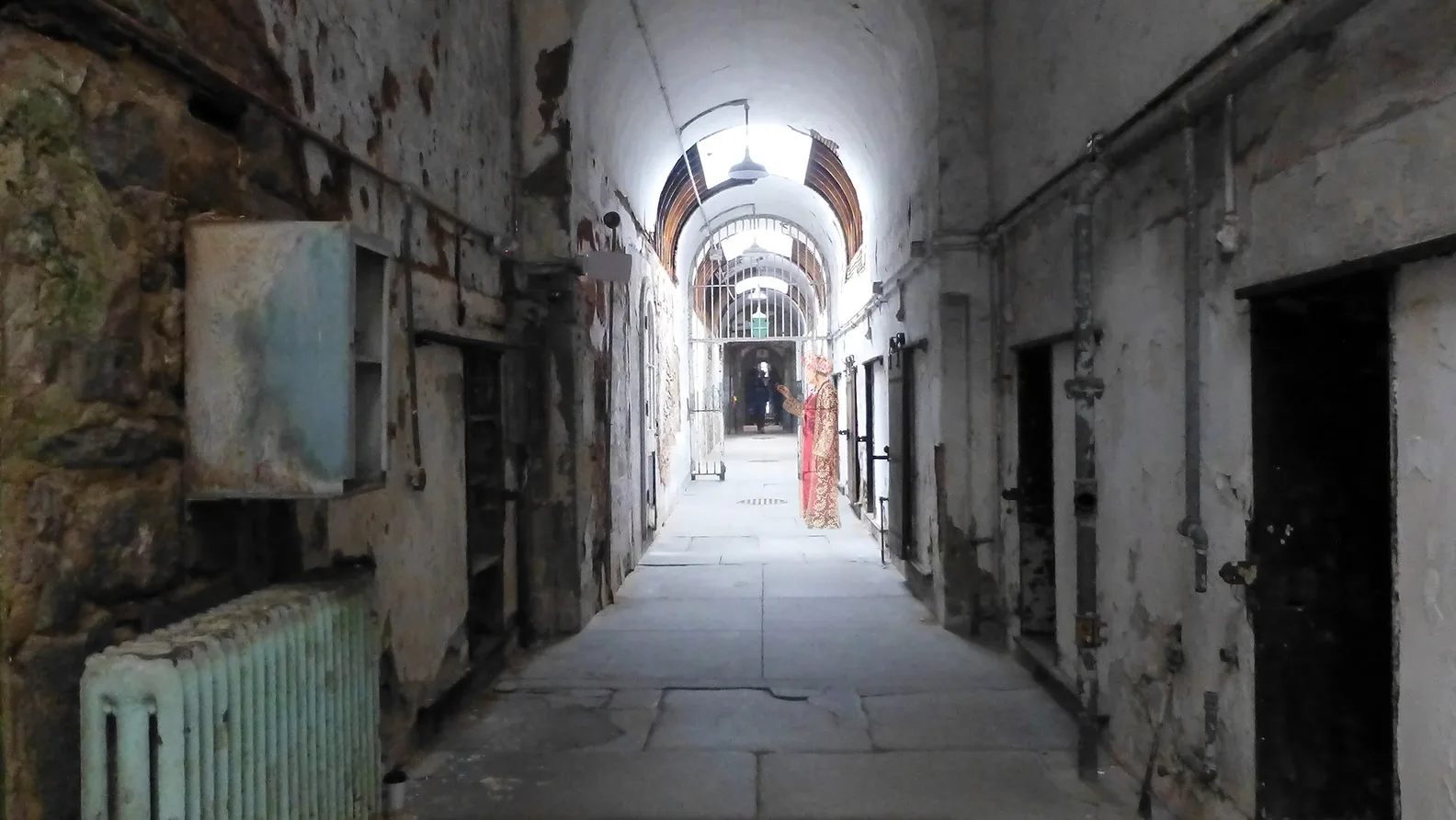
One night, when Mór Lugh was getting on in years, when the isolation and insanity was beginning to close in, he had a spectral visitor in his solitary cell. Sheelah floated in, dim in form but also with enough substance to reveal she wore a velvet-wedding coat and a hat with dried flowers. He stared, not fathoming who or what she was, but accepting her presence. Time had given Mór Mac patience. The vision remained for some time. The smell of coinnle corra around him, the calm, warm, soft spot reopened in his heart. Mór Mac sat on his bed, lay down, rolled over, and fell into an all too rare profound, peaceful sleep.
The next night Sheelah came again, this time speaking softly to him. He heard words of comfort and love for having tried to protect Catherine even though he had to let her go. He leaned forward to hear the whispering words, concentrating all night, until it became quiet daylight and the shade was gone.
Night after night this happened. One night he spoke to her, and they conversed for a long time about his life. They were very quiet, but still the guards could hear. They had punished him so much they were beyond caring if he was talking to himself. Yet, it was uncanny, they thought they heard the voice of a second woman, one who sounded young. They tried to look into his cell, but Mór Mac’s big bony frame blocked their view from seeing whoever else was there. The guards had come to like Mór Mac Lugh, he gave them no trouble. Truthfully so many of the prisoners lately had been talking to themselves they wouldn’t all fit into the hole. After this went on for some weeks, one of the guards asked Mór Mac who he was talking to. He looked at the guard with a shine in his eye, seeing something incredibly distant, and merely said, the Red Ghost. And that was all he ever said to anyone.
The guards had begun to get the jitters during this time, and their anxiety would increase in the years to come while Mór Mac was still alive. They would stand on the rampart catwalks at night, looking down into the cells, and there would be Mór Mac leaning forward talking to himself incessantly. They were pretty sure he had gone mad. They often joked among themselves that spending so much time alone in Eastern State it was a wonder they weren’t half crazy, too. None of them liked the night shift anymore, things happened that were inexplicable, frightening. Some swore they saw a ghost walking the second tier. They whispered among each other so the Warden wouldn’t hear, and dismiss them for superstitious nonsense. One old timer guard, who has spent as many years in Eastern State as Mór Mac, insisted it was a ghost of an older woman who smiled then passed through him with a cool whisper and breath of lavender and heather.
Sheelah was a gentle presence. When the prison population filled up with Irish and Africans, all thrown together now, they would say later that she began to visit them all. She would speak gently to each man and woman locked up alone. It kept their rage and madness at bay until they could return to the world and begin anew. Gradually, out in the world, tales about the Red Ghost of Eastern State began to spread.
Only Mór Lugh was kept in isolation for life, not even being let into the exercise yard. He didn’t want to leave his room, and in his last years, he chatted non-stop into the early hours with Sheelah and Catherine. We don’t know what they spoke about, or what was said to Mór Mac, but peacefulness and equanimity was his gift at the end. It spread to everyone in the prison. When he finally passed away one morning, found lying on his cot appearing to be in the deepest of sleeps, the prisoners swore that the Red Ghost appeared the night before all over the prison catwalks leading Mór Mac’s soul back to the ancient world to be with the tribe of Lugh. For years after, the guards and inmates would tell the story of the Red Ghost of Eastern State, the saga of Mór Mac, and Catherine, and how Sheelah’s loving presence was a balm to the damned inmates of Eastern State Penitentiary. Finally, time passed, the prisoners died, the guards retired and passed away, and the knowledge of the Red Ghost faded from consciousness.
Postscript
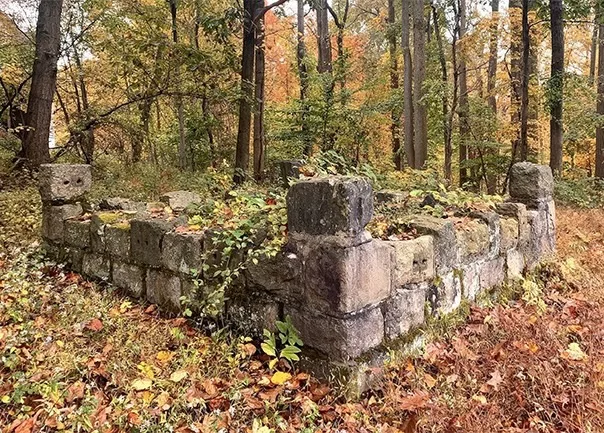
Everyday a host of commuters ride the R5 to Philadelphia. It is the most used route in the entire region. It passes through Malvern, still a quaint town. Just before stopping at the station, it goes through what has become known as Duffy’s Cut. There wasn’t much to notice about this until September of 2000. Dr. William Watson (Professor of History and Director of the Duffy’s Cut Project) sat in his office with a friend at the Immaculata University on King’s Road in Malvern. Looking across that evening at the faculty center, they saw shimmering lights, green and yellow neon in appearance, and appearing to be three thin men searching about. It was uncanny, spectral, lasting for some time.
The historian told this to his brother Frank, and they reminisced about how, growing up, they heard many stories from their grandfather about the ghosts of Duffy’s Cut. When the grandfather passed on in 1977, he had given a file to his wife, who in turn gave it to William. He now looked at it for the first time. What he found was the story of what had happened in Malvern in 1832. It had been put together in 1909 by a railroad employee who had heard the stories, and compiled the evidence. In part, it was based on a diary kept by the daughter of local militiaman from 1832, a local cholera victim Lt. William Ogden. It was noted in the file that there was much information pertaining to the death of the 57 Irish. The diary also spoke of the first ghost sightings one month after the murders. The diary had disappeared sometime after the death of the last sister in 1913. Dr. Watson began to investigate what had always seemed to be a tall tale around Malvern, and interest increased in the emerging story.
Despite being told by locals it was folklore and they were chasing ghosts, the historian persevered. He and his students began digging around in the Cut, finding bits and pieces of bones, bones that showed the signs of blunt trauma. Finally, in 2011 they found evidence under a tall, old tulip poplar tree. Felling the tree, they discovered that bones were fused with the tree roots. The tree had fed off of human remains over the years, becoming strong and beautiful. A few of the bones, including one of a woman with a fractured skull, were identified. They were sent back home to Ireland, where the story had taken on major national interest. The long memory of the Irish persisted, especially about the great migration to the America’s during the harsh famine years. Many had never been heard from again, and even now, their distant relatives thought of this.
A memorial at Duffy’s Cut was erected in 2019, to honor the 57 Irish laborers who died there. They had come from Counties Donegal, Tyrone and Derry to dig out the bedding for mile 59 of the Pennsylvania Railroad. That they were all deceased within six weeks has been resurrected out of the early American history, an earlier time of familiar nationalistic hate, racism, and murder. It became clear in the ensuing years after Dr. Watson had looked into this one story, they had been killed out of fear and phobias during a cholera pandemic that swept the northern and mid-Atlantic states.
Today Catherine Burns rests in Clonoe Parish in her home county of Tyrone, her remains sent home to a grieving community of Irish, more than ever connected to the loss of many Irish in the passages to America. Eastern State Penitentiary is now a museum. But newer prisons are filled with millions of inmates across the United States in the largest penal system in the world. There have been no sightings of the Red Ghost.